Medical shadowing and volunteering: Experience the full spectrum of healthcare in San Miguel de Allende
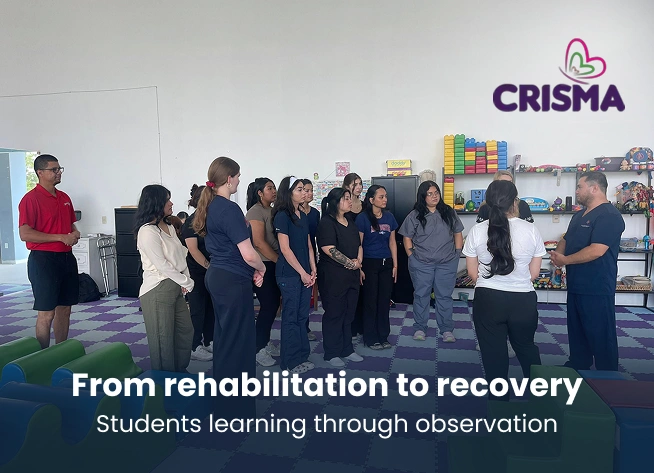
Medical shadowing and volunteering experiences can shape how students view healthcare, patient care, and their future careers. Yet many programs provide exposure to only one clinical setting, limiting a student’s understanding of how different healthcare disciplines work together.
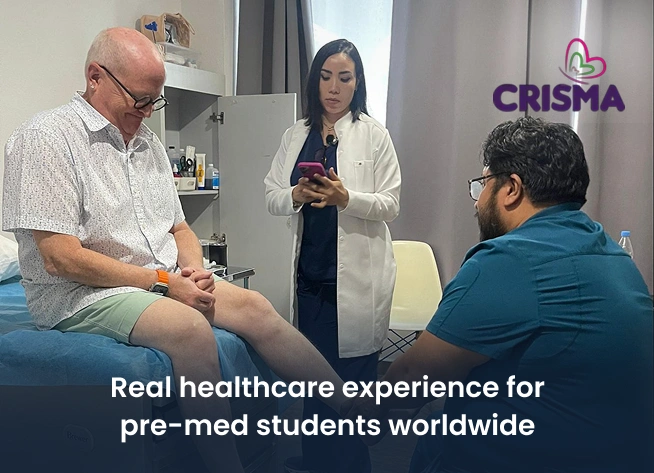
At CRISMA, students experience something different. Located in the heart of San Miguel de Allende, our program combines humanitarian rehabilitation services with observation opportunities at two leading private hospitals. This unique structure allows participants to engage in meaningful medical student shadowing, gain valuable San Miguel de Allende clinical observation experience, and explore multiple healthcare environments within a single placement.
Instead of seeing just one piece of the healthcare system, students witness the full continuum of care: from rehabilitation and recovery to surgery, emergency medicine, diagnostic imaging, and specialist consultations.
Medical shadowing and volunteering across three healthcare facilities
Most healthcare observation programs place students in a single clinic or hospital department. CRISMA’s model is built around exposure to a broader range of healthcare experiences.
Participants have access to:
Together, these facilities create one of the most comprehensive shadowing programs for pre-med students and allied health students seeking meaningful clinical exposure abroad.
Start where compassion meets clinical practice: CRISMA Rehabilitation Clinic
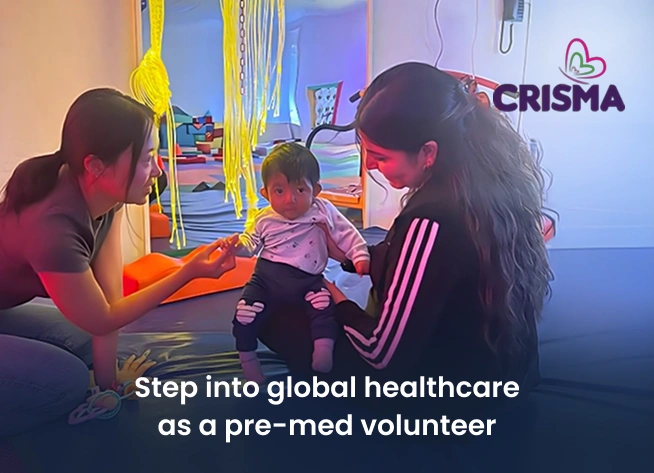
CRISMA’s rehabilitation center is where many students begin their journey. Here, they observe therapists and healthcare professionals working with children and adults facing physical, neurological, developmental, and communication challenges.
Physical therapy and rehabilitation
Students observe physical therapists helping patients improve movement, strength, balance, and independence. Many participants gain exposure to neurological rehabilitation, orthopedic recovery, and mobility-focused treatment programs.
This environment is especially valuable for students interested in international physical therapy internships, rehabilitation careers, or healthcare professions focused on long-term patient recovery.
Functional rehabilitation and daily living skills support
Students observe rehabilitation professionals working with patients to improve the skills needed for everyday living and greater independence at home, school, and work. Participants gain insight into treatment approaches that support functional recovery, adaptive strategies, and quality of life.
These experiences help students understand how rehabilitation extends beyond physical recovery and focuses on helping patients participate more fully in daily activities.
Speech and language therapy
Students interested in communication sciences and disorders gain valuable exposure to speech-language pathology services. Through observation, participants learn how therapists support patients with speech, language, cognitive, and swallowing challenges.
For students searching for opportunities similar to a speech therapy volunteering experience, CRISMA provides meaningful exposure within a multidisciplinary rehabilitation setting.
Humanitarian healthcare in action
Perhaps the most impactful aspect of the CRISMA experience is observing care provided to underserved populations. Students see firsthand how compassion, advocacy, and clinical expertise work together to improve lives.
These moments often become the experiences participants remember long after their placement ends.
Expand your perspective at La Clínica SMA
After gaining rehabilitation exposure, students can continue their learning journey at La Clínica SMA, one of San Miguel de Allende’s leading healthcare facilities.
Ambulatory surgery observation
Students observe outpatient surgical procedures and gain insight into pre-operative preparation, patient care coordination, and post-procedure recovery processes.
Watching healthcare teams work together in surgical settings helps students better understand the precision, communication, and planning required for successful outcomes.
Diagnostic imaging and laboratory services
Modern healthcare depends heavily on diagnostic information. Participants gain exposure to imaging workflows and laboratory processes that support clinical decision-making.
Observing these departments helps students appreciate how healthcare professionals use technology and testing to diagnose and manage patient conditions.
Integrated healthcare services
La Clínica SMA combines conventional medicine, rehabilitation services, and wellness-focused care. Students gain insight into how different treatment approaches can complement one another to support patient outcomes.
Experience full hospital care at MAC Hospitales
MAC Hospitales provides exposure to a comprehensive hospital environment with advanced medical services and specialists representing numerous healthcare disciplines.
Surgical services and operating rooms
Observing surgical procedures helps students understand the collaborative nature of healthcare. Surgeons, anesthesiologists, nurses, technicians, and support staff all play essential roles in patient care.
For many students, this is their first opportunity to witness healthcare delivery inside a modern operating room.
Emergency medicine
Emergency departments provide a unique perspective on healthcare. Students observe how clinical teams respond to urgent medical situations while prioritizing patient safety and rapid decision-making.
These experiences offer valuable insight into one of healthcare’s most dynamic environments.
Critical care and intensive care units
Students may also gain exposure to intensive care settings where multidisciplinary teams manage patients with complex medical needs.
Observing these environments highlights the importance of teamwork, communication, and evidence-based practice.
Specialist consultations
With specialists representing more than two dozen medical fields, participants gain insight into a wide range of healthcare careers and patient care approaches.
Why medical shadowing and volunteering across multiple settings matters
Patients rarely receive care in just one location.
A stroke survivor may begin treatment in a hospital, continue recovery through rehabilitation services, and later receive follow-up care from specialists. Understanding these transitions gives students a more complete picture of healthcare delivery.
A participant who observes rehabilitation therapy, hospital-based medicine, and surgical services develops a deeper appreciation for how healthcare professionals collaborate to improve patient outcomes.
That perspective is difficult to gain from a single-site observation experience.
Why students choose San Miguel de Allende clinical observation opportunities
San Miguel de Allende offers a unique combination of healthcare exposure, cultural immersion, and community engagement.
Unlike programs spread across multiple cities, CRISMA’s three-facility model allows students to maximize their learning time while minimizing travel.
Participants can spend up to 40 hours per week observing healthcare professionals and learning across rehabilitation, hospital, and specialty care environments.
For students exploring international medical volunteer opportunities, this structure creates a more immersive and meaningful educational experience.
Observer-only experiences with meaningful educational value
All hospital observations are conducted in compliance with facility policies, credentialing requirements, and patient privacy standards.
Students participate in an observer-only capacity while gaining valuable insight into clinical workflows, patient care processes, and interdisciplinary healthcare delivery.
This approach ensures that educational opportunities remain ethical, professional, and respectful of patient confidentiality.
From observation to inspiration: Building the foundation for a future in healthcare
Healthcare careers require more than academic achievement. They require empathy, perspective, and a genuine understanding of patient experiences.
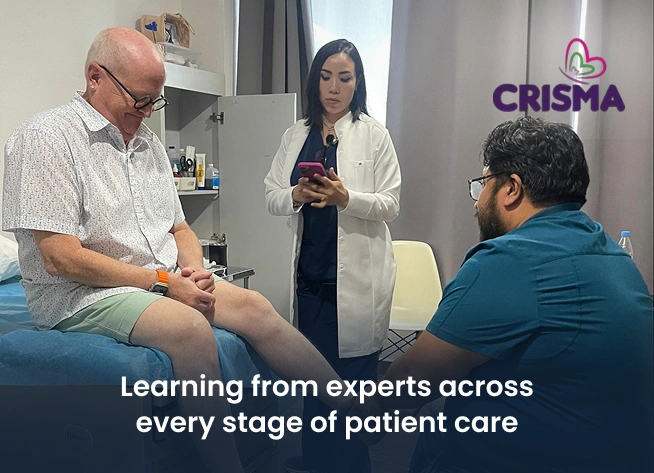
Through rehabilitation services at CRISMA and observation opportunities at two leading private hospitals, students gain exposure to a remarkable range of healthcare environments. Whether your goal is medicine, physical therapy, speech-language pathology, rehabilitation sciences, or another healthcare profession, medical shadowing and volunteering at CRISMA provides meaningful experiences that can help shape your future.
Ready to build clinical experience that truly matters?
Tell us your field of study, your career goals, and the number of observation hours you hope to complete. Our team will help you determine how CRISMA’s medical shadowing and volunteering program can provide meaningful exposure to rehabilitation, surgery, emergency medicine, and specialty care while making a real difference in the lives of others.
FAQs
1. What makes CRISMA’s medical shadowing and volunteering program different from other programs?
Most medical shadowing and volunteering programs offer exposure to only one healthcare environment. CRISMA provides access to three facilities: a rehabilitation clinic and two private hospitals, allowing students to observe rehabilitation therapy, surgery, emergency medicine, imaging services, and specialist consultations within one coordinated program.
2. What types of healthcare professionals can I observe during medical student shadowing?
Students may observe physical therapists, speech-language pathologists, physicians, surgeons, nurses, rehabilitation specialists, imaging professionals, and laboratory teams. Participants also gain exposure to rehabilitation programs focused on functional independence and daily living skills.
3. Is CRISMA a good choice for students seeking shadowing programs for pre-med students?
Yes. CRISMA is ideal for students who want exposure to multiple areas of healthcare before applying to medical school. Rather than limiting participants to one department, the program provides opportunities to observe rehabilitation, surgery, emergency care, and specialist consultations, creating a broader understanding of medicine.
4. How does CRISMA support San Miguel de Allende clinical observation experiences?
CRISMA offers structured clinical observation opportunities through partnerships with leading healthcare facilities in San Miguel de Allende. Students gain insight into patient care, rehabilitation, diagnostics, surgery, and hospital operations while learning from experienced healthcare professionals in real-world settings.
5. Can international students participate in the program?
Absolutely. CRISMA welcomes students from around the world who are seeking international medical volunteer opportunities and healthcare observation experiences. Housing, meals, and structured clinical exposure help make the experience accessible and rewarding for international participants.