Some evenings just feel different the moment you walk through the door. March 26, 2026 was one of those evenings. At 6:30 PM, the doors of the iconic Teatro Ángela Peralta swung open to welcome San Miguel de Allende to the Legends of Jazz Tour 2026, a concert that was billed as an international-level event, and by every measure, delivered exactly that.
Tickets were priced at just $500 MXN, making this world-class jazz accessible to the whole community. But there was an even bigger reason to show up: the concert was produced by Aletz Productions in collaboration with CRISMA and its parent organization, Vamos México, the institutions dedicated to supporting people in San Miguel de Allende through physical rehabilitation.
This wasn’t just a concert. It was a cause.
The stage was set for something special
Before the legends took the stage, the evening belonged to Max Onofre & The Villa Bros, who opened the concert with the kind of energy that tells an audience: settle in, because tonight is going to be something to remember. They warmed up the room, set the tone, and handed the stage over to four artists whose names alone were enough to fill a theater.
Four names. One legendary night.
Gabriel Hernandez. Rodrigo Castelan. Bobby Kapp.
And then, the announcement that made the night truly extraordinary: Luis Gasca as Special Guest.
These are not names that share a stage every day. The Legends of Jazz Tour 2026 brought them together in one of Mexico’s most beautiful concert venues, on one Thursday night in San Miguel de Allende, for an audience that knew exactly how rare and special the moment was.
An international-caliber lineup. An intimate setting. A city that knows how to appreciate great music. The combination was electric.
Music with a mission: CRISMA and Vamos México
Here is what elevated the Legends of Jazz Tour 2026 from a great concert into something truly meaningful: every seat filled that night was a direct contribution to CRISMA and Vamos México that work tirelessly to provide physical rehabilitation to people in San Miguel de Allende who need it most.
For CRISMA, an evening like this is more than a fundraiser. It is a statement. It says that this community shows up for its most vulnerable members, that world-class artists lend their talents to causes that matter, and that healing and culture are not separate things but deeply intertwined.
Jazz, after all, is the art of resilience, of improvising through difficulty, of finding beauty in the unexpected. That spirit lives at the heart of everything CRISMA does every single day.
Un Evento de Nivel Internacional (an international-level event), and It showed
The Legends of Jazz Tour 2026 in San Miguel de Allende was exactly what it promised: an international-level event, right in the heart of one of Mexico’s most beloved cities. A night where the music was extraordinary, the cause was worthy, and the community came together in the best possible way.
For CRISMA and Vamos México, it was a proud and joyful reminder that the work of rehabilitation resonates far beyond clinic walls, all the way to the stage of the Teatro Ángela Peralta, and into the hearts of everyone who was there.
Stay tuned to crismamexico.org for updates on future events, CRISMA’s programs, and more ways to support physical rehabilitation in San Miguel de Allende.
For many pre-med students, the journey toward a career in healthcare begins long before medical school. Classroom learning provides a strong foundation, but real growth often happens when students step outside familiar environments and experience healthcare in action. That is where international medical volunteer opportunities can make a powerful difference.
Working in healthcare settings abroad exposes students to new perspectives on medicine, patient care, and public health. It challenges them to adapt, communicate across cultures, and understand healthcare systems beyond their own communities. These experiences not only strengthen medical school applications but also shape the kind of compassionate, adaptable professionals the medical field truly needs.
For students who want more than textbooks and lectures, global volunteering offers a unique way to learn what medicine really means in the real world.
Why global healthcare exposure matters for pre-med students
Medicine is a universal profession, but healthcare systems vary widely across countries. Students who participate in international medical volunteer opportunities gain firsthand insight into how different communities approach medical care.
In many regions, healthcare providers work with limited resources while still delivering meaningful care to their patients. Observing this environment helps students understand the importance of adaptability, teamwork, and problem-solving.
Global healthcare exposure also broadens a student’s understanding of public health challenges. Conditions such as infectious diseases, limited access to care, and social determinants of health become much more tangible when seen in person rather than discussed in a classroom.
This kind of experience encourages future physicians to think more holistically about the role of medicine in society.
Learning beyond the classroom
While academic preparation is essential, medicine is ultimately a hands-on profession. Students who participate in medical volunteer programs gain exposure to real clinical environments where they can observe healthcare professionals at work.
These experiences often include assisting with basic tasks, observing consultations, or supporting healthcare teams in clinics and community programs. While responsibilities vary depending on the program, students typically gain valuable insight into daily medical practice.
More importantly, volunteering allows students to witness the human side of healthcare. Interacting with patients, listening to their stories, and seeing how medical teams respond to challenges provides lessons that cannot be taught in a lecture hall.
For many pre-med students, these moments confirm that pursuing medicine is truly the right path.
Building cultural awareness and communication skills
Healthcare professionals often serve patients from diverse cultural backgrounds. Developing cultural awareness early can make a meaningful difference in how future doctors interact with patients.
Participating in medical volunteer opportunities abroad allows students to engage with communities that may have different beliefs, traditions, and expectations around healthcare. Navigating these differences requires patience, empathy, and strong communication skills.
Students learn how to explain ideas clearly, listen carefully, and approach situations with respect for cultural perspectives. These abilities are essential for physicians who aim to provide compassionate and effective care.
Experiences abroad also encourage students to step outside their comfort zones, which strengthens their confidence in unfamiliar situations.
Strengthening a medical school application
Medical schools often look for applicants who demonstrate initiative, compassion, and a genuine commitment to healthcare. Experiences gained through international medical volunteer opportunities can help students show these qualities in meaningful ways.
Admissions committees understand that global healthcare experiences require dedication and adaptability. Students who volunteer abroad often return with a deeper understanding of patient care and the realities of healthcare delivery.
Beyond the experience itself, volunteering provides valuable stories and insights that can strengthen personal statements and interviews. Students are able to reflect on real interactions, challenges, and moments of growth.
These reflections often reveal maturity, empathy, and motivation, which are qualities medical schools value highly.
Developing a global perspective on medicine
Healthcare challenges rarely exist in isolation. Many issues faced in one part of the world are connected to global trends such as migration, climate change, and economic inequality.
Students who explore medical volunteer programs abroad often gain a broader understanding of how global health issues affect communities differently. This perspective encourages future healthcare professionals to think beyond local systems and consider the bigger picture.
A global outlook can inspire students to pursue careers in public health, research, or international healthcare initiatives. Even those who eventually practice locally often carry forward the lessons learned from working in diverse healthcare environments.
Understanding global health challenges can shape a physician’s perspective for an entire career.
Discovering the human side of healthcare
Perhaps the most meaningful part of volunteering abroad is the opportunity to connect with people. Healthcare is ultimately about human relationships. It involves listening, understanding, and supporting patients during vulnerable moments.
Students involved in international medical volunteer opportunities often discover how powerful these connections can be. Even small acts of assistance or kindness can make a lasting impression on both the patient and the volunteer.
These experiences remind future doctors why they chose this path in the first place. They highlight the importance of empathy, compassion, and dedication in every aspect of patient care.
For many students, these moments become the most memorable part of their pre-med journey.
Preparing for the responsibilities of medicine
Becoming a physician requires more than academic excellence. It requires emotional resilience, curiosity, and a willingness to learn from every experience.
Students who participate in medical volunteer opportunities abroad often develop these qualities through real-world exposure. They observe how healthcare professionals handle complex situations, communicate with patients, and collaborate with their teams.
These experiences help students better understand the responsibilities that come with a career in medicine. They also prepare them for the challenges they will eventually face in medical school and beyond.
By stepping into healthcare environments early, students gain valuable insight into the realities of the profession.
A journey that shapes future physicians
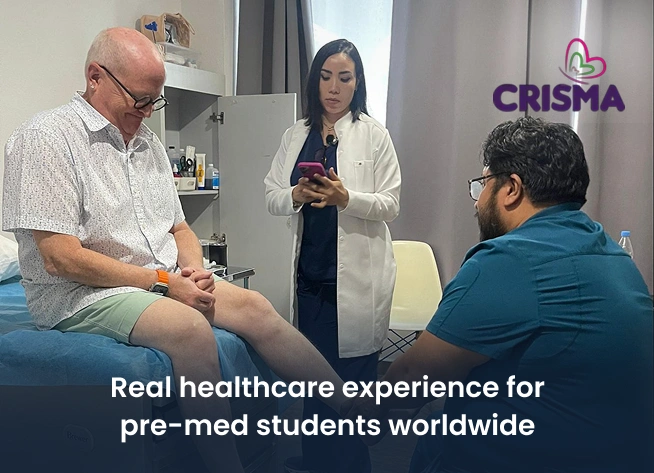
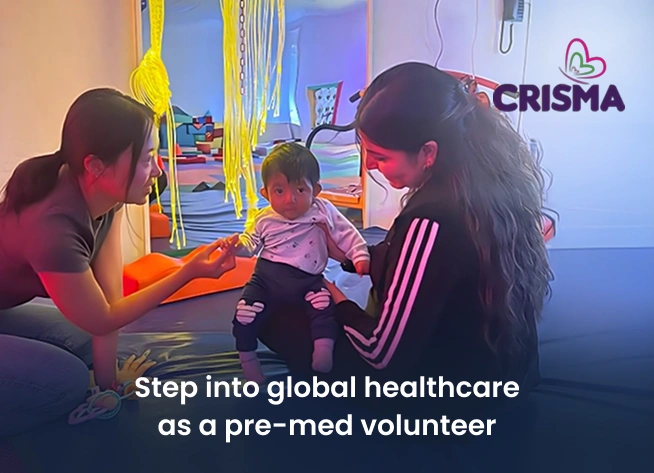
CRISMA helps pre-med students gain hands-on medical experience abroad.
For pre-med students seeking meaningful preparation for their future careers, global volunteering offers an experience unlike any other. Through international medical volunteer opportunities, students gain exposure to diverse healthcare systems, build cultural awareness, and develop a deeper understanding of patient care.
These experiences go far beyond strengthening an application. They help shape the mindset and values that define compassionate healthcare professionals.
At CRISMA, our medical volunteering program provides international pre-med students with valuable hands-on experience in real healthcare settings. If you are interested in exploring international medical volunteer opportunities and gaining meaningful clinical exposure, contact us today to learn more about our programs.
FAQs
1. Why are international medical volunteer opportunities valuable for pre-med students?
International medical volunteer opportunities allow pre-med students to gain real-world exposure to healthcare environments outside the classroom. These experiences help students observe how medical professionals interact with patients, manage limited resources, and work as part of a healthcare team. In addition to building clinical awareness, volunteering abroad helps students develop empathy, adaptability, and a broader understanding of global health challenges.
2. What can students expect to do in medical volunteer programs abroad?
In many medical volunteer programs, students assist healthcare teams with supportive tasks while observing clinical procedures and patient interactions. Depending on the program and location, volunteers may help with patient intake, organize medical supplies, or support community health initiatives. These experiences provide insight into daily medical practice while allowing students to learn directly from experienced healthcare professionals.
3. How do medical volunteer opportunities abroad strengthen a medical school application?
Participating in medical volunteer opportunities abroad demonstrates initiative, commitment to service, and a genuine interest in healthcare. Admissions committees often value applicants who have sought meaningful clinical exposure and shown a willingness to learn in diverse environments. These experiences also give students valuable stories and reflections that can strengthen personal statements and interviews.
4. What skills can students develop through international medical volunteering?
Students involved in international medical volunteer opportunities often develop skills that are essential for future physicians. These include communication, cultural awareness, teamwork, and problem-solving. Working in unfamiliar healthcare settings encourages students to adapt quickly and approach challenges with empathy and respect for different cultural perspectives.
5. How should students choose the right medical volunteer program abroad?
When selecting a program, students should look for opportunities that offer meaningful clinical exposure, proper supervision, and a supportive learning environment. It is important to choose programs that prioritize ethical volunteering practices and provide educational value. Researching the organization, understanding the program structure, and ensuring that the experience aligns with personal learning goals can help students make the most of their international volunteering experience.
For many students pursuing a career in healthcare, a student shadowing program is often the first real step into the medical world. It offers a chance to step beyond textbooks and lectures and observe what daily life in medicine actually looks like. Watching physicians interact with patients, collaborate with medical teams, and make clinical decisions can provide a level of understanding that no classroom alone can deliver.
But not all shadowing experiences are the same. Some programs focus purely on observation, while others encourage deeper engagement with the clinical environment. The location of the program also plays a major role. Shadowing doctors in your home country can offer valuable exposure, but shadowing abroad often introduces a level of immersion that changes how students understand medicine altogether.
Understanding the difference between observation and immersion can help students choose the right student shadowing program for their goals and future careers.
What observation looks like in traditional shadowing programs
Many shadowing programs for pre-med students in the United States and other developed countries follow strict hospital guidelines. These regulations exist to protect patient privacy and ensure safety, which is important. However, they also limit how involved students can be.
In many local shadowing experiences, students spend their time quietly observing physicians from the sidelines. They may follow a doctor through rounds, listen to consultations, and watch procedures from a distance. While this exposure is helpful, it often leaves students with a limited role in the clinical environment.
Students typically cannot participate in tasks, interact directly with patients, or assist with simple procedures. The experience becomes more like watching medicine happen rather than being part of it.
For some students, this observational format can feel passive. They gain insight into workflow and hospital structure, but they may finish the program wishing they had been able to engage more deeply.
The immersive nature of international shadowing
A student shadowing program abroad often offers a different experience. Many international healthcare settings encourage students to engage more actively with the environment while still respecting safety guidelines.
Instead of simply standing back and observing, students may be invited to participate in guided activities. This can include learning basic clinical skills, assisting with simple medical tasks, and participating in discussions about diagnoses and treatment decisions.
Immersion does not mean replacing professional medical staff. Instead, it means being included in the learning process. Students gain a clearer understanding of how healthcare teams operate because they experience it from within the clinical environment.
This type of involvement helps transform shadowing from a passive activity into a more meaningful educational experience.
Exposure to different healthcare systems
Another major difference between shadowing at home and abroad is the healthcare system itself.
When students shadow locally, they typically observe a system that they already understand culturally and structurally. Insurance processes, hospital workflows, and patient expectations often follow familiar patterns.
International programs introduce students to healthcare systems that may operate very differently. They may see how doctors adapt when resources are limited, how communities approach preventive care, and how cultural beliefs influence treatment decisions.
For students considering careers in global health, public health, or humanitarian medicine, this perspective can be extremely valuable. It broadens their understanding of what healthcare looks like beyond their own country.
Learning through cultural awareness
Medicine is not just about science. It is also about people.
Shadowing abroad exposes students to cultural differences that influence how patients communicate, how families participate in care, and how medical professionals build trust within communities.
Students often learn how language barriers are managed, how physicians adjust communication styles, and how cultural values shape medical decision-making.
This kind of cultural awareness is difficult to gain in a traditional student shadowing program at home. Yet it is an essential skill for healthcare professionals who will serve diverse patient populations.
Traveling to a new country, adapting to a different healthcare system, and working alongside international medical teams can challenge students in ways that classroom learning cannot.
Students often return from these programs with stronger confidence, better communication skills, and a clearer understanding of their motivations for entering medicine.
Instead of simply confirming their interest in healthcare, immersive shadowing experiences often deepen their commitment to the field.
From watching medicine to experiencing it firsthand
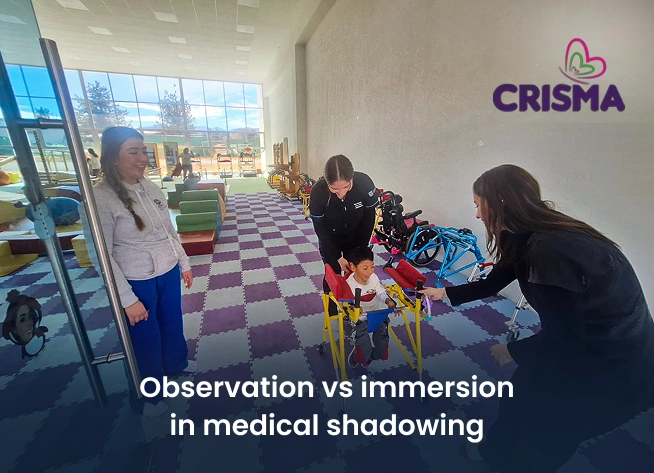
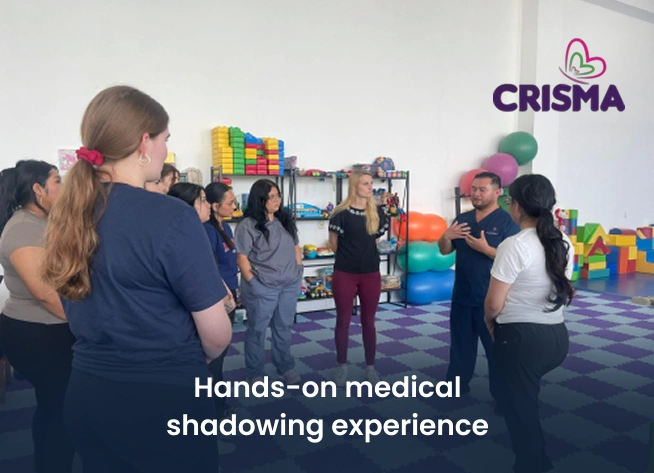
International healthcare students participate in guided clinical learning during a medical job shadowing program.
Choosing the right student shadowing program can shape how students view their future in medicine. While local shadowing provides useful observation, international experiences can offer deeper immersion and broader exposure to global healthcare practices.
For students interested in meaningful clinical engagement, CRISMA’s medical job shadowing program gives international healthcare students the chance to gain valuable experience through guided, hands-on exercises in real clinical settings. If you would like to learn more about the program and how it works, contact us today for additional details.
Students who want to see how healthcare works in real clinical environments can benefit from the practical exposure and mentorship offered through the program. It can also help future medical professionals build confidence while gaining a clearer understanding of patient care in a global healthcare setting.
FAQs
1. What is a student shadowing program in healthcare?
A student shadowing program allows aspiring healthcare professionals to observe experienced physicians and medical staff in real clinical settings. Students typically follow doctors during consultations, hospital rounds, and patient care activities to understand how medical decisions are made and how healthcare teams work together. These programs help students gain early exposure to the medical field before entering medical school or other healthcare training.
2. How do shadowing programs for pre-med students help with career decisions?
Shadowing programs for pre-med students give participants a realistic view of what a career in medicine looks like. By observing doctors in hospitals or clinics, students can see the challenges, responsibilities, and daily routines of healthcare professionals. This experience often helps students confirm their interest in medicine, choose potential specialties, and better prepare for medical school applications.
3. What is the main difference between observing and immersive shadowing?
Observation-based shadowing focuses mostly on watching physicians perform their work from a distance. Students usually follow doctors and observe patient interactions, procedures, and consultations without direct involvement.
Immersive shadowing, on the other hand, allows students to engage more actively in the learning process. Under proper supervision, they may participate in guided activities, learn basic clinical skills, and take part in discussions about patient care. This deeper level of engagement often helps students understand clinical work more clearly.
4. Why do some students choose international student shadowing programs?
Many students choose international student shadowing programs because they offer exposure to different healthcare systems, patient populations, and medical practices. Students may observe how doctors deliver care in environments with different resources, cultural expectations, and public health challenges. This broader perspective can help students develop cultural awareness and a deeper understanding of global healthcare.
5. When should pre-med students consider joining a shadowing program?
Students can benefit from a student shadowing program at various stages of their academic journey. Many pre-med students participate during their undergraduate years, while others join programs during summer breaks or gap years. Early exposure helps students gain insight into clinical practice, strengthen their medical school applications, and develop a clearer understanding of their long-term career goals.
Manage Consent
To provide the best experiences, we use technologies like cookies to store and/or access device information. Consenting to these technologies will allow us to process data such as browsing behavior or unique IDs on this site. Not consenting or withdrawing consent, may adversely affect certain features and functions.
Functional
Always active
The technical storage or access is strictly necessary for the legitimate purpose of enabling the use of a specific service explicitly requested by the subscriber or user, or for the sole purpose of carrying out the transmission of a communication over an electronic communications network.
Preferences
The technical storage or access is necessary for the legitimate purpose of storing preferences that are not requested by the subscriber or user.
Statistics
The technical storage or access that is used exclusively for statistical purposes.The technical storage or access that is used exclusively for anonymous statistical purposes. Without a subpoena, voluntary compliance on the part of your Internet Service Provider, or additional records from a third party, information stored or retrieved for this purpose alone cannot usually be used to identify you.
Marketing
The technical storage or access is required to create user profiles to send advertising, or to track the user on a website or across several websites for similar marketing purposes.