
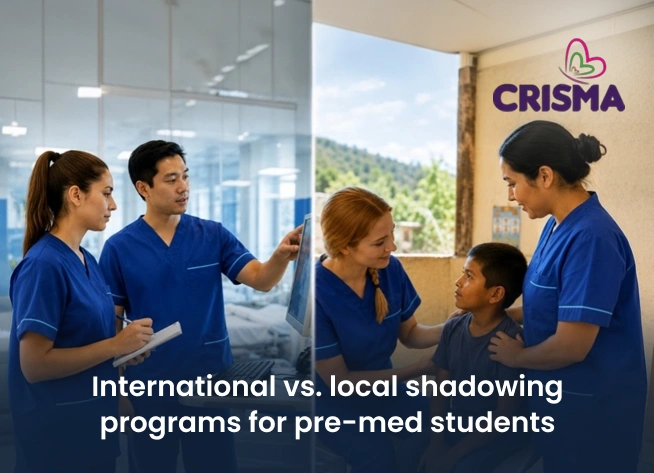
For aspiring physicians, choosing the right clinical observation experience can be an important step toward medical school. Many students begin researching shadowing programs for pre-med students to gain firsthand insight into patient care, healthcare environments, and the daily responsibilities of medical professionals. Beyond strengthening an application, shadowing helps students confirm their interest in medicine and develop a clearer understanding of the profession.
Medical schools look for more than strong grades and test scores. Admissions committees want to see evidence that applicants have explored healthcare through meaningful clinical exposure. Whether completed locally or abroad, shadowing experiences allow students to observe healthcare teams in action, understand patient interactions, and gain valuable perspective on what a future career in medicine may involve.
Both local and international programs offer valuable opportunities. However, they differ significantly in the type of exposure, perspective, and personal growth they provide. Understanding those differences can help you choose a program that aligns with your goals and strengthens your medical school application.
What are shadowing programs for pre-med students?
A medical shadowing program allows students to observe healthcare professionals in real-world clinical settings. Rather than providing treatment, students watch patient interactions, clinical decision-making processes, and healthcare team collaboration.
Shadowing helps students:
- Confirm their interest in medicine
- Understand daily clinical responsibilities
- Observe professional communication
- Gain insight into patient-centered care
- Build experiences that support medical school applications
For many students, shadowing provides their first realistic view of healthcare beyond textbooks and classrooms.
How many shadowing hours do medical schools prefer?
There is no universal requirement for shadowing hours. However, many pre-med advisors recommend accumulating at least 40 to 100 hours of physician shadowing before applying to medical school.
Competitive applicants often exceed these recommendations. Some students complete more than 150 hours across multiple specialties to demonstrate a broader understanding of healthcare.
Quality matters just as much as quantity. Admissions committees often value meaningful experiences and thoughtful reflection more than simply logging hours.
Does international shadowing count toward medical school applications?
In many cases, yes.
Medical schools generally recognize international shadowing experiences when they provide structured observation, meaningful clinical exposure, and opportunities for learning. Students can typically include these experiences in their applications and discuss them during interviews.
However, international shadowing should complement, not completely replace, domestic healthcare exposure. Combining both experiences often creates the strongest application profile because it demonstrates adaptability while maintaining familiarity with healthcare systems closer to home.
Local shadowing programs: Pros, cons, and what to expect
Local shadowing remains one of the most accessible ways for students to gain clinical exposure.
Many students arrange opportunities through hospitals, clinics, family physicians, or healthcare networks within their communities.
Benefits include lower costs, easier scheduling, and minimal travel requirements.
When local shadowing makes sense
Local shadowing may be ideal for students who:
- Are exploring medicine for the first time
- Have limited budgets
- Need flexible scheduling
- Want to build relationships within their local healthcare community
- Need to accumulate additional shadowing hours while in school
For many students, local opportunities provide a practical starting point.
Common limitations of local programs
While valuable, local programs can sometimes offer limited exposure.
Students may encounter:
- Short observation periods
- Restricted patient interaction
- Observation of only one specialty
- Limited understanding of healthcare delivery outside their local system
- Fewer opportunities for cultural competency development
These limitations do not diminish the value of local shadowing. However, they can create gaps for students seeking broader healthcare perspectives.
International shadowing programs for pre-med students: The benefits of going abroad
International experiences provide students with opportunities that are often difficult to replicate through local placements alone.
A pre-med shadowing program abroad exposes students to different healthcare systems, patient populations, treatment approaches, and cultural contexts.
These experiences can help students develop greater adaptability, empathy, and awareness of global health challenges.
Broader clinical exposure
International programs often provide access to diverse patient populations and interdisciplinary healthcare environments.
Students may observe:
- Rehabilitation specialists
- Physicians
- Physical therapists
- Speech therapists
- Psychologists
- Audiologists
Observing multiple specialties helps students understand how healthcare professionals collaborate to improve patient outcomes.
Cross-cultural healthcare experience
Modern healthcare increasingly serves diverse populations.
International shadowing helps students develop:
- Cultural awareness
- Communication skills
- Adaptability
- Global health perspectives
- Appreciation for healthcare disparities
These qualities are highly valued by medical schools and future employers.
Common questions about shadowing abroad
Many students worry about travel logistics, language barriers, and safety.
Reputable international medical shadowing programs typically provide:
- Structured supervision
- Orientation support
- Housing assistance
- Local guidance
- Emergency protocols
- Educational objectives
Students should always evaluate these factors before selecting a program.
International vs. local shadowing programs: Side-by-side comparison
| Factor | Local Shadowing Program | International Shadowing Program |
|---|---|---|
| Cost | Lower | Higher |
| Travel Required | No | Yes |
| Cultural Exposure | Limited | Extensive |
| Healthcare Perspectives | Single System | Multiple Systems |
| Patient Diversity | Moderate | High |
| Personal Growth | Moderate | Significant |
| Professional Development | Strong | Stronger Through Global Exposure |
| Application Differentiation | Moderate | High |
| Interdisciplinary Learning | Often Limited | Frequently Extensive |
| Global Health Understanding | Minimal | Significant |
Both options offer value. The best choice depends on your goals, interests, budget, and desired learning outcomes.
How to choose the right shadowing program for your goals
Not all programs provide the same educational value.
When evaluating how to find a shadowing program, consider the following checklist:
- ✓ Direct clinical observation opportunities
- ✓ Qualified healthcare professionals
- ✓ Multiple specialty exposure
- ✓ Structured learning objectives
- ✓ Ethical patient interaction policies
- ✓ Safety and logistical support
- ✓ Positive student reviews
- ✓ Transparent program expectations
- ✓ Opportunities for reflection and mentorship
Programs that meet these criteria are more likely to provide meaningful educational experiences.
Interested in comparing your options further?
Explore CRISMA’s Medical Shadowing Program
and see how international clinical observation can complement your medical school preparation.
CRISMA’s shadowing program in Mexico: A different kind of clinical experience
Many shadowing opportunities focus primarily on hospitals or primary care settings.
CRISMA offers something different.
Located in San Miguel de Allende, Mexico, CRISMA provides students with exposure to interdisciplinary rehabilitation medicine, allowing them to observe healthcare professionals working together to support patients throughout long-term recovery journeys.
This broader perspective helps students understand healthcare beyond diagnosis and treatment alone.
Observe an interdisciplinary care model
Healthcare increasingly relies on collaborative care.
At CRISMA, students can observe how physicians, therapists, psychologists, and rehabilitation specialists coordinate treatment plans designed to improve quality of life and long-term outcomes.
This team-based approach reflects the future of healthcare delivery.
Specialties students commonly observe
Students may gain exposure to:
- Pediatric rehabilitation
- Physical therapy
- Speech and language therapy
- Audiology
- Psychology
- Neurological rehabilitation
- Mobility and functional recovery programs
This variety creates a richer learning experience than many traditional shadowing placements.
What a typical day at CRISMA looks like
A typical day may include:
- Morning clinical observations
- Rehabilitation therapy sessions
- Interdisciplinary team discussions
- Patient progress reviews
- Educational reflection activities
Students observe how healthcare teams collaborate while supporting patients with a wide range of physical, developmental, and neurological conditions.
View this post on Instagram
Why rehabilitation medicine provides a unique learning opportunity
Many students shadow physicians in acute-care settings where patient interactions are brief, and treatment goals focus on immediate concerns.
Rehabilitation medicine offers a different perspective.
Students can observe the entire patient journey, from assessment through recovery and long-term support.
At CRISMA, students may witness:
- Children with cerebral palsy working toward developmental milestones
- Adults recovering mobility after injury or illness
- Individuals receiving speech and hearing interventions
- Families participating in long-term care planning
This exposure helps students appreciate the human side of medicine and the importance of continuity of care.
Additionally, CRISMA’s longstanding collaboration with academic partners, including programs associated with the University of California, Irvine, reflects its commitment to educational excellence and meaningful student experiences.
CRISMA meets the qualities students should look for in a shadowing program and offers unique rehabilitation-focused experiences rarely available elsewhere.
View program details to learn more.
Take the next step toward medical school
Choosing between local and international shadowing programs for pre-med students is ultimately about finding the experience that best supports your personal and professional goals.
For students seeking broader clinical exposure, interdisciplinary learning, and meaningful insight into patient-centered care, international shadowing can provide an experience that extends far beyond observation alone.
CRISMA’s Medical Shadowing Program in San Miguel de Allende offers students the opportunity to learn from experienced healthcare professionals while gaining exposure to rehabilitation medicine, collaborative care, and diverse patient populations.
Our cohort sizes are intentionally small to maximize learning opportunities and mentorship. Ready to take the next step? Apply for the Medical Shadowing Program or contact our team to learn more about upcoming program dates and availability.
FAQs
1. Is international shadowing recognized by U.S. medical schools?
International shadowing can strengthen medical school applications when it provides meaningful clinical observation, structured learning, and opportunities for reflection. Many students include these experiences in application materials and interviews.
2. How many shadowing hours should pre-med students complete?
While there is no universal requirement, many advisors recommend 40 to 100 hours. Competitive applicants often exceed that amount through multiple experiences across different specialties.
3. Do I need to speak Spanish to participate in a shadowing program in Mexico?
Program requirements vary. Many structured programs provide support for international students and are designed to help participants learn effectively regardless of language background.
4. How do I find reputable shadowing programs for pre-med students abroad?
Look for shadowing programs for pre-med students with experienced healthcare professionals, transparent policies, strong student reviews, safety support, educational objectives, and established organizational credibility.
5. Can I observe multiple specialties during one program?
Yes. Some programs, including interdisciplinary rehabilitation settings, allow students to observe professionals from multiple specialties and better understand collaborative healthcare delivery.

Clinical Education Consultant


