
There comes a moment in every pre-med journey when textbooks stop feeling like enough. You understand the concepts, you’ve memorized the pathways, but something still feels distant. Medicine, after all, is not just science. It is human. It is lived. It is felt.
That is where a medical shadowing internship becomes transformative.
It gently bridges the gap between theory and real-world care. It allows you to step quietly into clinical spaces, observe with intention, and begin to understand what it truly means to care for another person.
Many students looking for a medical shadowing program abroad are not just seeking travel, but meaningful clinical exposure that helps them understand medicine beyond textbooks.
If you’ve ever searched for “medical shadowing near me” and wondered what the experience is actually like, this guide walks you through what you truly learn, not just academically, but personally.
What is a medical shadowing internship, and why does it matter?
A medical shadowing internship is an observational experience where students follow licensed healthcare professionals in clinical settings to understand patient care, medical decision-making, and real-life healthcare dynamics.
It matters because it answers questions that textbooks cannot. What does a physician’s day actually look like? How do they speak to patients? How do they handle uncertainty?
This kind of exposure builds not just knowledge, but clarity. It helps you confirm whether medicine is truly the path you want to pursue.
For many pre-med students, this becomes their first true clinical shadowing experience for pre-med preparation, offering clarity about what a future in medicine really looks like.
A day in the life: from observation to understanding
Each day in a shadowing environment feels different, yet quietly structured.
You might begin by observing patient consultations. You notice how a physician greets a patient, how they ask questions, and how carefully they listen. Over time, you start recognizing patterns in symptoms, diagnoses, and treatment approaches.
This is often what students expect when searching for a ‘hospital shadowing program Mexico,’ but the experience tends to be more immersive and reflective than they initially imagine.
As the day unfolds, you may observe procedures, discuss cases with mentors, or reflect on what you’ve seen.
What stands out most is not just the medical process, but the human connection. The reassurance in a doctor’s voice. The patience during difficult conversations. The balance between clinical precision and empathy.
This is where medical shadowing internships begin to shape your perspective in ways no classroom can.
Clinical knowledge you begin to connect
One of the most meaningful shifts during a medical shadowing internship is how theory starts to make sense in context.
Concepts you once studied in isolation begin to connect with real patients. Conditions are no longer abstract terms. They are lived experiences.
You begin to understand:
- How symptoms present differently in real life
- Why diagnosis is often a process, not an instant answer
- How treatment decisions consider both science and patient circumstances
This kind of learning feels less like memorizing and more like understanding.
If you’ve ever wondered what do you learn from medical shadowing, this is where the answer becomes clear through real patient interactions and clinical reasoning.
The art of patient interaction
Medicine is not just about treating illness. It is about caring for people.
During your shadowing experience, you observe how healthcare professionals communicate. You see how they build trust, explain complex conditions in simple language, and offer reassurance during uncertain moments.
These interactions teach you:
- The importance of listening without interruption
- How tone and body language influence patient comfort
- Why empathy is just as important as expertise
For many students searching for “medical shadowing near me,” this human aspect becomes the most impactful takeaway.
Exposure to different medical specialties
Medical shadowing allows you to experience a variety of specialties, helping you understand the diversity within healthcare.
You may observe areas such as:
- General medicine
- Pediatrics
- Orthopedics
- Rehabilitation and therapy
- Emergency care
Each specialty offers a different rhythm, different challenges, and different patient interactions. This exposure helps you begin thinking about where your interests might lie.
This variety is one reason why a medical internship San Miguel de Allende offers is a more well-rounded clinical perspective compared to single-specialty programs.
Understanding real-world healthcare systems
Another valuable aspect of medical shadowing internships is gaining insight into how healthcare systems function beyond textbooks.
You begin to see:
- How teams collaborate across roles
- How time constraints impact care delivery
- How cultural and social factors influence patient care
This broader perspective helps you understand that medicine exists within a larger system, one that requires adaptability, awareness, and compassion.
For those seeking ‘hands-on medical experience Mexico,’ even observational exposure like this provides valuable insight into how healthcare operates in diverse environments.
Confidence, clarity, and personal growth
Perhaps the most unexpected learning during a medical shadowing internship is personal.
You start gaining confidence. Not because you are performing procedures, but because you are understanding the environment.
You begin to feel more certain about your path. Or sometimes, you realize you need to explore further. Both outcomes are valuable.
You also develop:
- Professional awareness
- Emotional resilience
- A deeper sense of responsibility toward patient care
These are qualities that stay with you long after the experience ends.
How shadowing supports your medical school journey
Medical schools often look for applicants who understand what the profession truly involves.
Shadowing helps you:
- Gain documented clinical exposure
- Build meaningful experiences for your application
- Reflect on real patient interactions in your personal statement
Many successful applicants report 100 or more shadowing hours, as recommended by organizations like the AAMC. This experience strengthens not just your application, but your confidence in pursuing medicine.
Conclusion: where learning becomes real
There is something deeply humbling about standing in a clinical space for the first time. You realize how much there is to learn, and how much responsibility comes with the desire to help others.
A medical shadowing internship is not just about observing medicine. It is about beginning to understand it. It teaches you how science meets humanity, how knowledge turns into care, and how small moments can make a lasting impact.
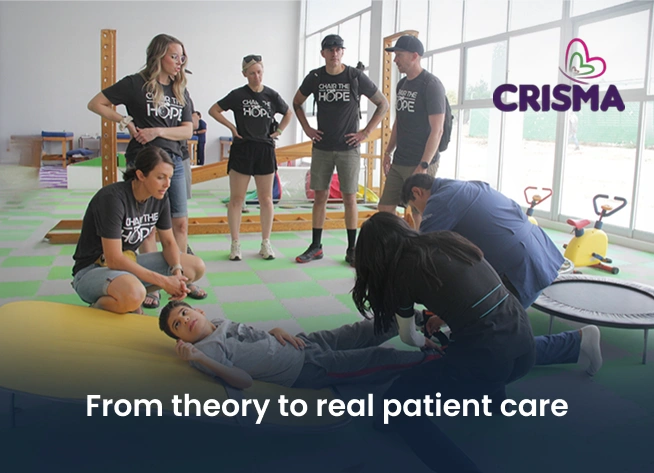
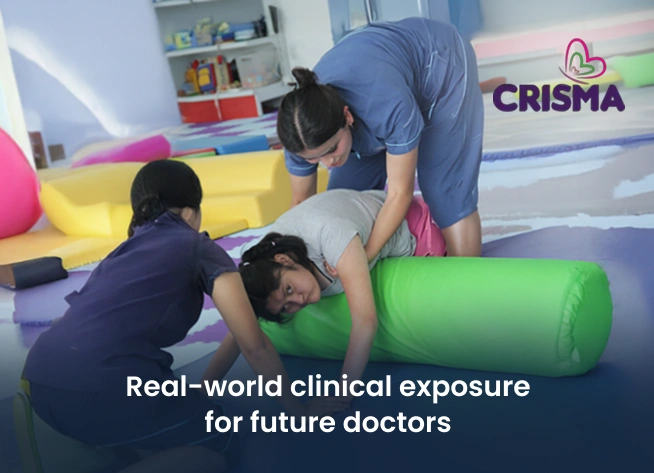
At CRISMA, students gain meaningful exposure to real patient care, clinical environments, and compassionate medical practice. You learn how professionals think, communicate, and respond in real situations, all while growing in confidence and clarity about your path.
If you are ready to move from theory to something more real, something more human, we invite you to take the next step. Reach out to learn more about how this experience can shape your journey in medicine.
FAQs
1. What do you actually learn during medical shadowing?
You learn how healthcare works in real settings, including patient interaction, clinical reasoning, and professional behavior. It helps connect theoretical knowledge with real-life practice.
2. Is medical shadowing the same as a clinical internship?
No. Shadowing is primarily observational, while clinical internships may involve hands-on responsibilities. Shadowing focuses on understanding rather than performing.
3. Do medical schools accept international shadowing hours?
Yes, many medical schools accept international shadowing as long as it is well-documented and meaningful. It can also show adaptability and global awareness.
4. How many shadowing hours do you need for medical school?
While there is no strict requirement, many applicants complete 40 to 100 or more hours to build a strong application.
5. Do you need to speak Spanish for shadowing in Mexico?
Not necessarily. While helpful, many programs provide guidance to help students navigate language differences during their experience.
6. Is medical shadowing safe for students?
Structured programs prioritize student safety, offering supervised environments and support throughout the experience.