Three stories, one heart: choosing to sponsor a child at CRISMA
January 13, 2026

At CRISMA, every child who comes through our doors carries a story shaped by challenge, courage, and quiet determination. Sponsoring a child is not about rescuing or fixing someone. It is about walking alongside them, supporting their rehabilitation journey, and becoming part of a family’s ongoing story of resilience and hope.

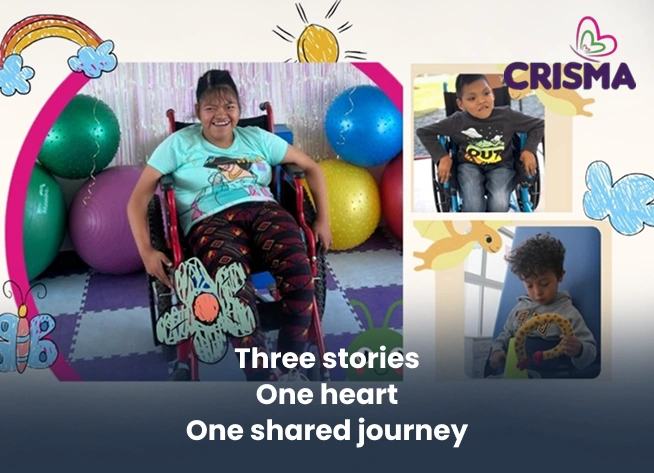
Recently, CRISMA received a heartfelt request from someone wishing to sponsor a child. In response, Doña Marta, our co-founder, shared three profiles. Each child’s path is different, yet all three reflect the heart of CRISMA’s mission: compassionate rehabilitation, family-centered care, and long-term support rooted in dignity.

Below, we share their stories so you can understand not only their needs, but also their strength.

Angel: preserving movement and nurturing hope
Child sponsorship - Angel

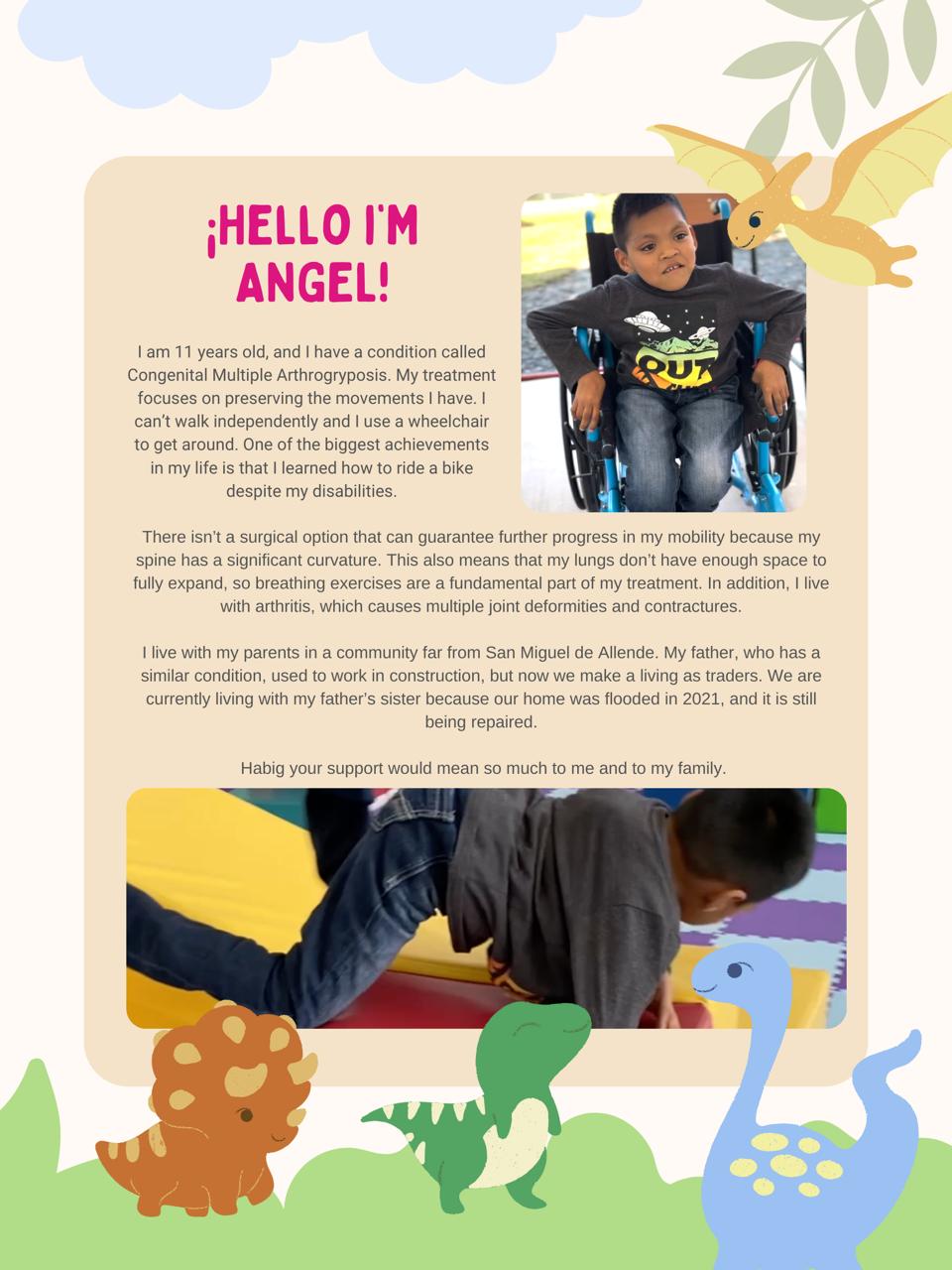
Angel is 11 years old and lives with congenital multiple arthrogryposis, a condition that affects his joints and mobility. His treatment focuses on preserving the movement he has, because for Angel, every bit of mobility matters.

He cannot walk independently and uses a wheelchair, yet one of his greatest personal achievements is learning how to ride a bike. It is a powerful reminder of his determination and spirit. Due to a significant curvature in his spine, there are no surgical options that can guarantee further improvement. This curvature also limits the space his lungs need to fully expand, making breathing exercises a fundamental part of his therapy.

Angel also lives with arthritis, which causes joint deformities and contractures. Beyond his medical challenges, his family faces ongoing hardship. After their home was flooded in 2021, they moved in with extended family and are still waiting for repairs to be completed. His father, who has a similar condition, once worked in construction but now supports the family as a trader.

Sponsoring Angel helps ensure continuity of care, supporting his physical therapy, respiratory exercises, and overall quality of life, while also easing the burden on a family doing everything they can with limited resources.

Lupito: progressing forward, step by step
Child sponsorship - Lupito

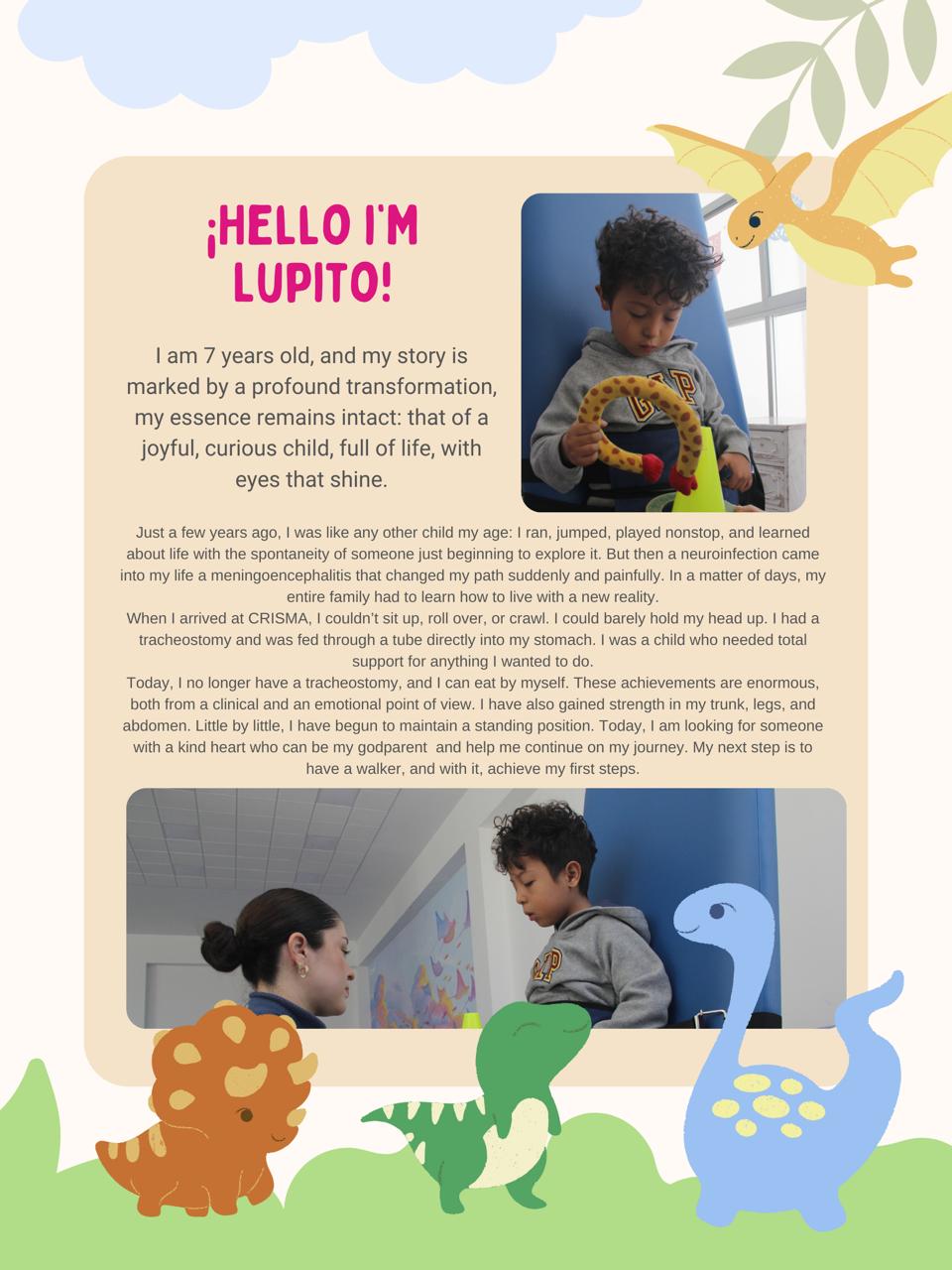
Lupito is 7 years old and full of joy, curiosity, and life. Just a few years ago, his world changed suddenly after a severe neuroinfection led to meningoencephalitis. In a matter of days, his entire family had to learn how to live with a new reality.

When Lupito first arrived at CRISMA, he could not sit up, roll over, or crawl. He could barely hold his head up. He had a tracheostomy and was fed through a tube directly into his stomach. He depended entirely on others for every daily activity.

Today, his progress is deeply moving. Lupito no longer has a tracheostomy and can eat by himself. He has gained strength in his trunk, legs, and abdomen, and little by little, he has begun maintaining a standing position. Each milestone reflects months of patient, consistent rehabilitation.

His next goal is to use a walker and take his first independent steps. Sponsorship for Lupito directly supports the intensive therapy needed to continue building on the progress he has worked so hard to achieve.

Elia: growing independence with family support
Child sponsorship - Elia

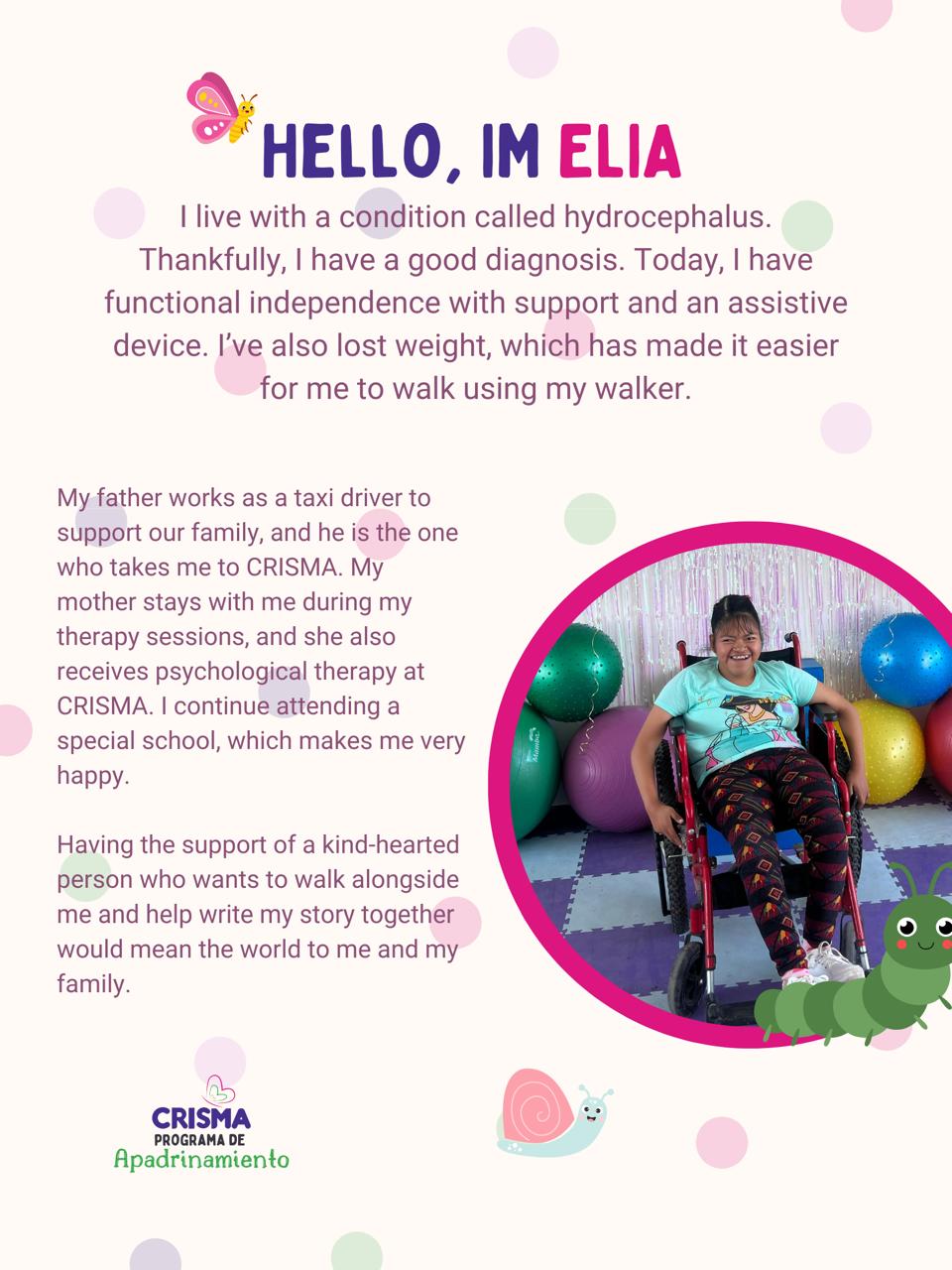
Elia lives with hydrocephalus and has made steady progress through ongoing therapy and strong family involvement. With the help of assistive devices and continued rehabilitation, she has achieved functional independence with support, allowing her to move through daily life with growing confidence.

Her father works as a taxi driver to support the family and brings Elia to CRISMA for her therapy sessions. Her mother stays with her throughout treatment and also receives psychological support at CRISMA, because caring for caregivers is an essential part of holistic rehabilitation.

Elia attends a special school, something that brings her great happiness and a sense of belonging. Continued therapy helps her maintain mobility, strengthen her walking ability with a walker, and preserve the independence she has gained.

Sponsoring Elia means supporting not only physical progress, but emotional well-being and family stability.

What child sponsorship truly means at CRISMA

Child sponsorship at CRISMA is not a one-time act of charity. It is a relationship built on trust, consistency, and shared humanity. Sponsorship helps cover essential rehabilitation therapies, specialized equipment, and family support services that are often inaccessible to families living far from San Miguel de Allende or facing financial limitations.

More than anything, sponsorship sends a simple but powerful message to a child and their family: you are not alone.

Choosing with compassion and intention

There is no right or wrong choice among these three children. Angel, Lupito, and Elia each represent why CRISMA exists: to provide compassionate, long-term pediatric rehabilitation in Mexico, grounded in respect, care, and love.

Whichever child a sponsor chooses, they become part of something deeply meaningful: a journey measured not only in physical milestones, but in dignity, confidence, and human connection.

If you feel called to walk alongside one of these children, we welcome you with open arms.

FAQs

1. What does child sponsorship at CRISMA actually support?

Child sponsorship at CRISMA helps cover essential rehabilitation services, including physical therapy, specialized treatment plans, assistive equipment, and ongoing evaluations. It also supports families by reducing the financial strain of long-term care and, when needed, includes emotional and psychological support for caregivers.

2. How does CRISMA decide which children are eligible for sponsorship?

Children are identified based on medical need, family circumstances, and the importance of consistent therapy for long-term progress. CRISMA works closely with families to ensure sponsorship directly supports a child’s rehabilitation goals and complements the care already being provided through our programs.

3. How does sponsorship make a long-term difference for a child?

Rehabilitation progress depends on consistency. Sponsorship allows children to continue therapy without interruption, helping them maintain mobility, build strength, and work toward greater independence. Over time, this stability can significantly improve the quality of life and support a child’s ability to participate more fully in daily activities.

4. Are families involved in their child’s rehabilitation process?

Yes. Family involvement is central to CRISMA’s approach. Parents and caregivers are encouraged to participate in therapy sessions, learn exercises to continue at home, and receive guidance and emotional support. Strengthening the family unit is an essential part of a child’s rehabilitation journey.

5. How does CRISMA ensure dignity and respect in child sponsorship?

CRISMA approaches sponsorship with humility and care. Children and families are never portrayed as charity cases, but as partners in a shared journey. We prioritize transparency, informed consent, and respectful storytelling that honors each child’s resilience and humanity.

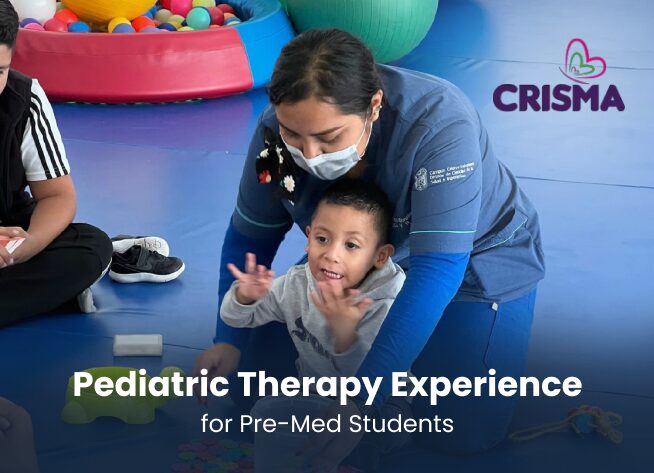
The Future of Care – Why Pediatric Rehabilitation Observation Is a Critical Experience for Pre-Med Students

November 6, 2025

There’s a moment every future doctor remembers; a moment where medicine stops being an idea and becomes a calling. For many pre-med students, that moment arrives when they witness a young child take their first steps after months of hard work in Pediatric Rehabilitation.

It’s not just medical progress. It’s a life-changing transformation. Pediatric therapy rooms are filled with laughter, tiny victories, determined parents, and a healthcare team that celebrates every milestone with joy. Shadowing or observing this environment gives pre-med students something textbooks never can: the heart of medicine.

Why Pediatric Rehabilitation Matters in Modern Healthcare

Through pediatric physiotherapy shadowing, students can witness firsthand how care teams tailor their approach to a child’s abilities and emotional needs. They observe how families are guided, supported, and empowered, and how therapy becomes play while still leading to measurable improvement. This perspective prepares future doctors to be not just clinically skilled, but emotionally aware; something that is desperately needed in healthcare.

Real Learning Happens Beyond the Classroom

Medical textbooks are valuable, but they cannot teach the emotional depth of caring for a child who struggles to speak, walk, or hold a pencil. Observing real therapy sessions provides insights that no lecture can match.

During pediatric rehabilitation observation, pre-med students learn how physical and occupational therapists engage children in purposeful play. They observe how treatment plans are developed and adjusted over time, gaining an understanding of how small improvements can lead to significant change. Instead of just reading about gross and fine motor skills, students witness how these skills are practiced, strengthened, and celebrated. Somewhere between the first hesitant movement and the loud cheers that follow, students begin to understand why they want to become doctors.

What Watching Kids Teach Us About Resilience

Children do not approach therapy with fear; they approach it with determination. Whether they are learning to balance, improving coordination, or strengthening muscles, kids tackle each challenge with courage, and often with a smile.

Through pediatric therapy volunteer opportunities, students come to realize that healing is not a linear process, that resilience can be taught, and that children are master teachers in their own right. Pre-med students often leave these experiences surprised, not by how much they helped, but by how much they learned from the children.

Understanding the Collaborative Nature of Pediatric Care

Pediatric Rehabilitation is never the work of a single individual. Doctors, physical therapists, occupational therapists, nurses, speech therapists, and families collaborate to create a supportive environment. Observing this teamwork allows pre-med students to witness what holistic medicine looks like in action.

They learn how communication between providers ensures consistent care, how therapy goals are set based on functional outcomes, and how professionals adjust strategies to match a child’s progress and personality. It prepares students for the reality of patient care, where collaboration and empathy are just as important as knowledge.

Developing Emotional Intelligence – A Skill Doctors Need

In pediatrics, the smallest victories often mean the most. A new word spoken, a hand finally gripping a toy, or a first independent step can be monumental. Students who engage in pediatric physiotherapy shadowing learn to slow down and appreciate progress at the child’s pace. They become better listeners, show patience and encouragement, and witness unconditional support from therapists. In essence, they learn what empathy in healthcare truly looks like.

For a deeper look into how pediatric therapy transforms young lives, read the blog post, Early Therapy for Kids: Helping Little Ones Grow Strong and Confident, which explores how early support shapes lifelong confidence and independence.

Pre-med students participating in pediatric therapy shadowing program, assisting therapists with exercises.
CRISMA offers immersive programs for pre-med students, including pediatric physiotherapy shadowing and volunteer opportunities in pediatric therapy.

The Future of Healthcare Starts With Heart

Through Pediatric Rehabilitation, future doctors learn to listen not only to symptoms but also to stories, building meaningful relationships with patients and families, and celebrating progress, no matter how small. If you are a pre-med student seeking an experience that will genuinely shape your approach to healthcare, pediatric rehabilitation observation is one of the most valuable opportunities you can pursue.

At CRISMA, we provide meaningful opportunities for pre-med students to gain hands-on experience and insight through observation. If you are ready to witness the heart of pediatric care, develop empathy, and learn from both children and dedicated professionals, contact us to learn more.

FAQs

What is pediatric rehabilitation observation, and why is it important for pre-med students?

Pediatric rehabilitation observation involves watching and learning from professionals as they provide therapy to children with developmental, neurological, or physical challenges. For pre-med students, it is important because it extends beyond textbook learning, offering insight into how healthcare providers integrate clinical knowledge with empathy and effective communication. Observing children’s progress, therapists’ strategies, and family interactions helps students understand the human side of medicine, which is essential for shaping compassionate future doctors.

How does pediatric physiotherapy shadowing benefit a student’s medical education?

Pediatric physiotherapy shadowing enables students to witness firsthand how therapy is tailored to each child’s unique needs, encompassing exercises, mobility training, and creative methods of engaging children in treatment. Students gain practical knowledge of therapeutic approaches, patient assessment, and treatment planning. More importantly, shadowing nurtures emotional intelligence, teaching pre-med students to appreciate progress in non-linear ways and to communicate effectively with young patients and their families—skills that are crucial in any medical specialty.

Can volunteering in pediatric therapy help pre-med students develop skills beyond clinical knowledge?

Yes. Participating as a pediatric therapy volunteer helps students develop empathy, patience, and strong interpersonal skills. They learn to build trust with children, encourage their participation in therapy, and support families as they navigate healthcare challenges. These experiences cultivate qualities that are invaluable in medicine, such as resilience, emotional awareness, and the ability to provide holistic care that addresses both physical and emotional needs.

What kind of experiences will students gain during pediatric rehabilitation observation?

Students will observe therapists interacting with children, implementing exercises, and adjusting treatment plans based on individual progress. They will see how therapists make therapy engaging and motivating while tracking measurable outcomes. Students also gain insight into multidisciplinary teamwork, observing how doctors, therapists, and families work together to coordinate care. This immersive exposure teaches students about the importance of collaboration, communication, and the personalized nature of pediatric healthcare.

How can pediatric rehabilitation observation impact a student’s future career in medicine?

This type of observation can significantly strengthen a student’s medical school application and professional development. It demonstrates a commitment to understanding patient-centered care, particularly in high-empathy settings. Students learn how early intervention can shape a child’s development, how therapy goals are set and achieved, and how emotional support complements clinical care. These lessons influence how future doctors approach patient care, making them more compassionate, attentive, and effective healthcare providers.