From UC Irvine to San Miguel – A Journey of Learning, Health, and Community Heart

November 24, 2025

Hello, dear CRISMA friends and supporters! We’re absolutely buzzing with excitement as we share a recent milestone that truly embodies the spirit of our work – collaboration that crosses borders and brings brilliant minds right to our community.

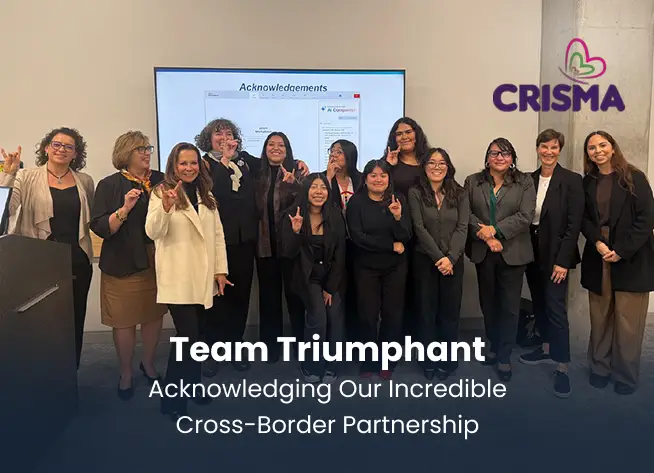
Recently, we had the immense pleasure of seeing the phenomenal culmination of a recent project. A group of future public health leaders – Master’s students from the Joe C. Wen School of Population & Public Health at UC Irvine (UCI) – presented their findings back in California from their Global Learning Experience with us in September. We want to take a moment to celebrate the immediate, fresh energy, empathy, and academic rigor they brought to San Miguel de Allende.

A Deeper Dive into Community Health –  The CRISMA Extension Program

The students’ work centered around a project titled: “Reaching Rural Communities: The CRISMA Extension Program.” This isn’t just a catchy name; it reflects a genuine effort to understand and strengthen the services we provide to our neighbors in rural areas.

The UCI team, under the leadership of Environmental and Occupational Health student Natalie Han and Global Concentration student Janeth Cabañas, focused on key areas that directly impact the health and well-being of the people we serve. They were here not just to observe, but to actively participate and learn from the ground up during their September visit.

Two Workshops, Two Pathways to Empowerment
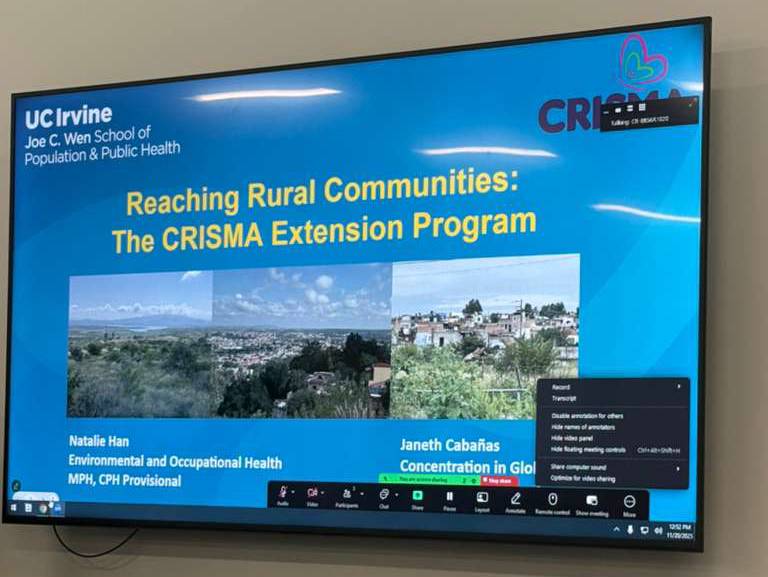
Presentation slide from UCI: "Reaching Rural Communities: The CRISMA Extension Program" featuring students Natalie Han and Janeth Cabañas.
The title slide from the recent UCI presentation, highlighting the ambitious goal of “Reaching Rural Communities” through the data-driven work of students Natalie Han and Janeth Cabañas.

A significant part of the project involved designing and evaluating two community workshops. This is where the academic learning turned into real-world impact:

  • Workshop 1: Education on CRISMA and Needs Assessment
    This session was all about introducing the community to the full range of CRISMA services and, crucially, listening. Through community discussions, the students conducted a needs assessment to understand the most pressing issues, because we know the people we serve are the true experts on their own needs.
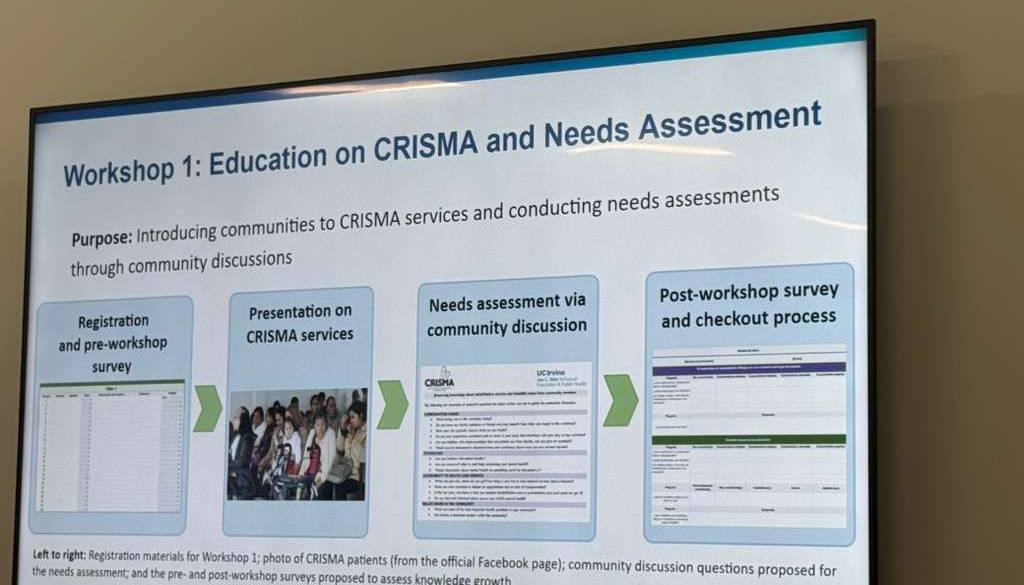
    ‘Workshop 1: Education on CRISMA and Needs Assessment’ presentation slide.
    Presentation slide of ‘Workshop 1: Education on CRISMA and Needs Assessment’
  • Workshop 2: Physiotherapy Techniques
    Based on what we see every day, this workshop was designed to empower communities with knowledge about rehabilitative and ergonomic practices they can use in their daily lives.
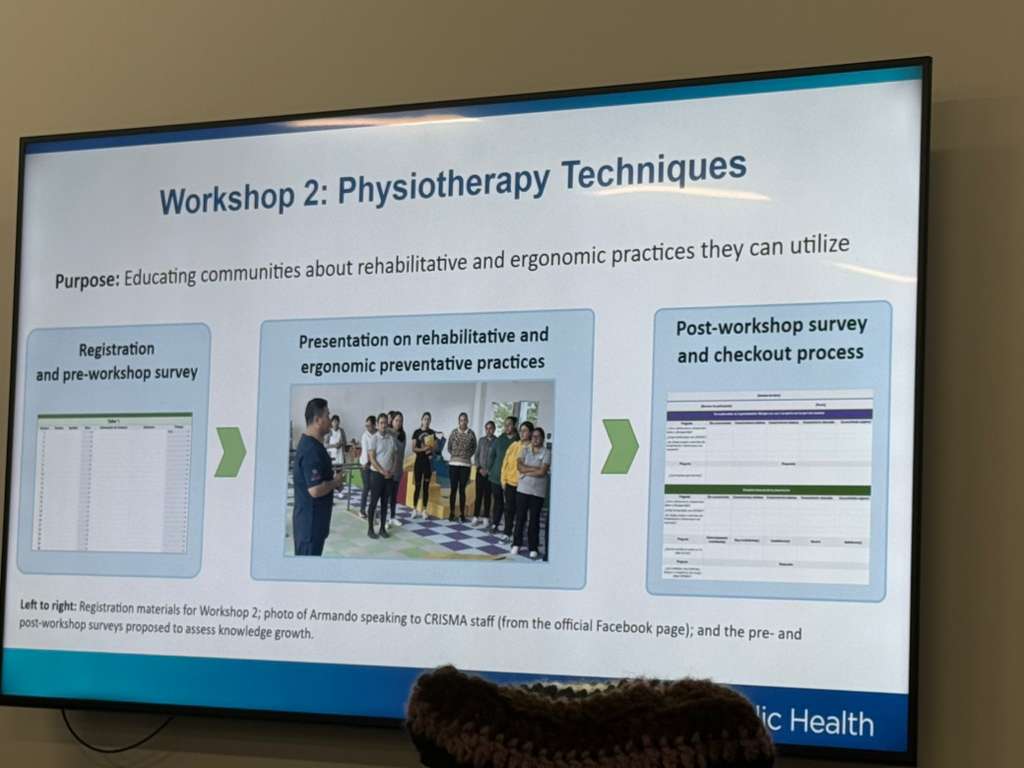
    ‘Workshop 2: Physiotherapy Techniques’ presentation slide.
    Presentation slide of ‘Workshop 2: Physiotherapy Techniques’

This work echoes the powerful insights shared by our own team members, like Dr. Rodrigo Marcelo Chávez Espinola, General Physician, who emphasized the crucial ‘window of opportunity’ for seeking timely care to prevent complications. It’s about getting people the right information and support at the right time. Likewise, Armando Rodriguez, Lead Physiotherapist, reminded us, “It’s not just about correcting their form, it’s about having them understand why it’s important, and how to prevent injuries.”

Navigating Data to Drive Better Care

Public health is not just about the heart; it’s also about evidence. The UCI students dedicated their time to rigorous academic work, focusing on reviewing and analyzing CRISMA’s nutrition records to evaluate the data-driven impact of the Alovēa supplement program.

Their project involved a clear process:

  1. Data Collection – Gathering and merging records.
  2. Data Cleaning – Making sure the information is accurate and ready to use.
  3. Data Visualization – Using tools like Tableau to make the data understandable.
  4. Data Analysis – Using statistical software (like R/SAS) to assess effectiveness and evaluate nutritional status changes.

The students noted important data collection gaps, such as missing baseline data and challenges with certain measurement tools (like digital scales for infants). This feedback is incredibly valuable, providing us with a clear roadmap for improving how we measure progress and, in turn, how we serve our communities better. It is a genuine collaboration where we learn from each other.

The UCI-CRISMA Partnership – A Journey of Learning and Belonging

The energy from the recent presentation, held at the Susan Samueli Integrative Health Institute, was inspiring. The students described their experience as “Where Culture Meets Public Health: A Journey of Learning and Belonging”- a testament to the welcoming spirit of the people of San Miguel and the staff at CRISMA.

Their work, and the address by Dean Bernadette Boden-Albala, MPH, Dr.PH, of the Joe C. Wen School of Population and Public Health, reaffirms that when academia and community hearts meet, truly remarkable things happen. We are so proud of the collaboration and the strong partnership built between our organizations.


View this post on Instagram


A post shared by CRISMA (@crismamexico)

We are deeply grateful for the dedication of these students and the entire UCI team. This collaboration reminds us that by working together – sharing knowledge, showing kindness, and embracing the principle of evidence-based care – we can continue to reach more rural communities and empower families to live healthier, stronger lives.

Thank you, UCI, for sharing your time and your minds with us!

The Future of Care – Why Pediatric Rehabilitation Observation Is a Critical Experience for Pre-Med Students

November 6, 2025

There’s a moment every future doctor remembers; a moment where medicine stops being an idea and becomes a calling. For many pre-med students, that moment arrives when they witness a young child take their first steps after months of hard work in Pediatric Rehabilitation.

It’s not just medical progress. It’s a life-changing transformation. Pediatric therapy rooms are filled with laughter, tiny victories, determined parents, and a healthcare team that celebrates every milestone with joy. Shadowing or observing this environment gives pre-med students something textbooks never can: the heart of medicine.

Why Pediatric Rehabilitation Matters in Modern Healthcare

Through pediatric physiotherapy shadowing, students can witness firsthand how care teams tailor their approach to a child’s abilities and emotional needs. They observe how families are guided, supported, and empowered, and how therapy becomes play while still leading to measurable improvement. This perspective prepares future doctors to be not just clinically skilled, but emotionally aware; something that is desperately needed in healthcare.

Real Learning Happens Beyond the Classroom

Medical textbooks are valuable, but they cannot teach the emotional depth of caring for a child who struggles to speak, walk, or hold a pencil. Observing real therapy sessions provides insights that no lecture can match.

During pediatric rehabilitation observation, pre-med students learn how physical and occupational therapists engage children in purposeful play. They observe how treatment plans are developed and adjusted over time, gaining an understanding of how small improvements can lead to significant change. Instead of just reading about gross and fine motor skills, students witness how these skills are practiced, strengthened, and celebrated. Somewhere between the first hesitant movement and the loud cheers that follow, students begin to understand why they want to become doctors.

What Watching Kids Teach Us About Resilience

Children do not approach therapy with fear; they approach it with determination. Whether they are learning to balance, improving coordination, or strengthening muscles, kids tackle each challenge with courage, and often with a smile.

Through pediatric therapy volunteer opportunities, students come to realize that healing is not a linear process, that resilience can be taught, and that children are master teachers in their own right. Pre-med students often leave these experiences surprised, not by how much they helped, but by how much they learned from the children.

Understanding the Collaborative Nature of Pediatric Care

Pediatric Rehabilitation is never the work of a single individual. Doctors, physical therapists, occupational therapists, nurses, speech therapists, and families collaborate to create a supportive environment. Observing this teamwork allows pre-med students to witness what holistic medicine looks like in action.

They learn how communication between providers ensures consistent care, how therapy goals are set based on functional outcomes, and how professionals adjust strategies to match a child’s progress and personality. It prepares students for the reality of patient care, where collaboration and empathy are just as important as knowledge.

Developing Emotional Intelligence – A Skill Doctors Need

In pediatrics, the smallest victories often mean the most. A new word spoken, a hand finally gripping a toy, or a first independent step can be monumental. Students who engage in pediatric physiotherapy shadowing learn to slow down and appreciate progress at the child’s pace. They become better listeners, show patience and encouragement, and witness unconditional support from therapists. In essence, they learn what empathy in healthcare truly looks like.

For a deeper look into how pediatric therapy transforms young lives, read the blog post, Early Therapy for Kids: Helping Little Ones Grow Strong and Confident, which explores how early support shapes lifelong confidence and independence.

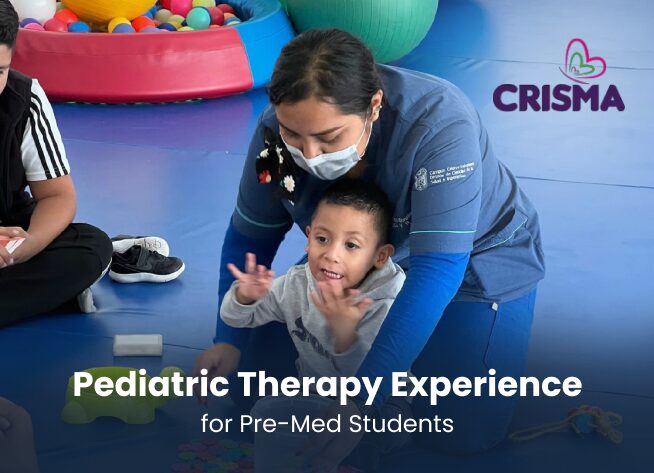
Pre-med students participating in pediatric therapy shadowing program, assisting therapists with exercises.
CRISMA offers immersive programs for pre-med students, including pediatric physiotherapy shadowing and volunteer opportunities in pediatric therapy.

The Future of Healthcare Starts With Heart

Through Pediatric Rehabilitation, future doctors learn to listen not only to symptoms but also to stories, building meaningful relationships with patients and families, and celebrating progress, no matter how small. If you are a pre-med student seeking an experience that will genuinely shape your approach to healthcare, pediatric rehabilitation observation is one of the most valuable opportunities you can pursue.

At CRISMA, we provide meaningful opportunities for pre-med students to gain hands-on experience and insight through observation. If you are ready to witness the heart of pediatric care, develop empathy, and learn from both children and dedicated professionals, contact us to learn more.

FAQs

What is pediatric rehabilitation observation, and why is it important for pre-med students?

Pediatric rehabilitation observation involves watching and learning from professionals as they provide therapy to children with developmental, neurological, or physical challenges. For pre-med students, it is important because it extends beyond textbook learning, offering insight into how healthcare providers integrate clinical knowledge with empathy and effective communication. Observing children’s progress, therapists’ strategies, and family interactions helps students understand the human side of medicine, which is essential for shaping compassionate future doctors.

How does pediatric physiotherapy shadowing benefit a student’s medical education?

Pediatric physiotherapy shadowing enables students to witness firsthand how therapy is tailored to each child’s unique needs, encompassing exercises, mobility training, and creative methods of engaging children in treatment. Students gain practical knowledge of therapeutic approaches, patient assessment, and treatment planning. More importantly, shadowing nurtures emotional intelligence, teaching pre-med students to appreciate progress in non-linear ways and to communicate effectively with young patients and their families—skills that are crucial in any medical specialty.

Can volunteering in pediatric therapy help pre-med students develop skills beyond clinical knowledge?

Yes. Participating as a pediatric therapy volunteer helps students develop empathy, patience, and strong interpersonal skills. They learn to build trust with children, encourage their participation in therapy, and support families as they navigate healthcare challenges. These experiences cultivate qualities that are invaluable in medicine, such as resilience, emotional awareness, and the ability to provide holistic care that addresses both physical and emotional needs.

What kind of experiences will students gain during pediatric rehabilitation observation?

Students will observe therapists interacting with children, implementing exercises, and adjusting treatment plans based on individual progress. They will see how therapists make therapy engaging and motivating while tracking measurable outcomes. Students also gain insight into multidisciplinary teamwork, observing how doctors, therapists, and families work together to coordinate care. This immersive exposure teaches students about the importance of collaboration, communication, and the personalized nature of pediatric healthcare.

How can pediatric rehabilitation observation impact a student’s future career in medicine?

This type of observation can significantly strengthen a student’s medical school application and professional development. It demonstrates a commitment to understanding patient-centered care, particularly in high-empathy settings. Students learn how early intervention can shape a child’s development, how therapy goals are set and achieved, and how emotional support complements clinical care. These lessons influence how future doctors approach patient care, making them more compassionate, attentive, and effective healthcare providers.

How Rehabilitation Training Transforms Lives in Underserved Communities

May 20, 2025

What if the power to walk again, hold a spoon, or play with a child after an injury was just out of reach because of where you lived? In many underserved communities, access to basic healthcare is limited, and rehabilitation training is often considered a luxury rather than a necessity. But at CRISMA, we believe everyone deserves a chance at healing and independence, no matter their income, location, or background. Through meaningful programs and hands-on support, we’re helping people rebuild their lives, one step at a time.

The Power of Rehabilitation in Low-Resource Settings

When most people think of rehabilitation, they imagine hospitals with advanced machines and teams of therapists. But in reality, effective rehabilitation training doesn’t have to be high-tech to be life-changing. In underserved communities, where injuries often go untreated and chronic conditions worsen over time, even simple, consistent physical therapy can dramatically improve a person’s quality of life.

From stroke survivors relearning to walk to children with developmental delays gaining mobility and confidence, adult physical rehabilitation training and paediatric physical rehabilitation training offer hope. It’s more than physical healing; it’s a journey toward dignity, independence, and purpose.

Why Rehabilitation Is Often Overlooked

In many parts of the world, especially in low-income areas, primary healthcare focuses on acute treatment and prevention. Unfortunately, this often leaves out recovery. People who survive an accident, surgery, or illness may be discharged with little to no follow-up care. This gap leads to long-term disability and loss of livelihood, especially for those who rely on physical labor.

There’s a misconception that rehabilitation training is only for elite athletes or people in wealthy countries. That couldn’t be further from the truth. Recovery is a human right. Everyone deserves support on their path to healing.

CRISMA’s Impact on Local Communities

At CRISMA, we work directly with underserved communities, providing vital therapy services in areas where access is limited or nonexistent. Our centers focus on personalized training designed to meet people where they are – literally and figuratively.

From elderly patients managing arthritis to young adults recovering from spinal injuries, our trained therapists use a mix of physical therapy, local community support, and evidence-based care to help each person progress.

We also educate families on how to continue basic therapy exercises at home. That way, healing doesn’t stop at the clinic door.

Creating Opportunities for Future Healthcare Professionals

We know that true change takes collaboration. That’s why CRISMA opens its doors to international pre-med, physical therapy, and healthcare students who are passionate about service and learning. Through our summer physical therapy internship opportunities, students work alongside experienced therapists, gaining exposure to real-world cases in a cross-cultural environment.

Unlike traditional internships, where students might observe from a distance, CRISMA encourages hands-on involvement under supervision. Whether helping with stretching techniques, learning how to adapt exercises for limited equipment, or simply offering emotional support to patients, interns walk away with a deep sense of purpose and perspective.

Training That Goes Beyond Muscles and Bones

While rehabilitation training is rooted in physical movement, the impact goes much deeper. Many patients struggle emotionally after trauma or illness. They may feel like a burden to their families or lose hope for the future. Our programs focus on restoring both body and spirit.

Our therapists work to build trust with every patient, celebrating small milestones like taking a first step, sitting up unassisted, or completing a full session without fatigue. These victories may seem small on the surface, but they’re monumental in restoring confidence and mental well-being.

The Role of Education in Sustainable Change

Healing is not a one-time event. Sustainable change comes through education for both patients and the local communities they live in. CRISMA integrates workshops and training sessions to teach basic rehabilitation principles to caregivers, volunteers, and even local health workers.

When a mother learns how to help her child with cerebral palsy practice daily stretches, or when a neighbor learns how to support an injured friend with mobility, the entire community becomes part of the healing process. That ripple effect is what turns temporary aid into lasting transformation.

Why Underserved Communities Deserve the Best

Too often, underserved communities are expected to make do with less. At CRISMA, we reject that mindset. Our goal is to offer the best training available – not just what’s “good enough” – because everyone deserves quality care.

We invest in local talent, advanced therapeutic tools, and international collaborations to bring the highest level of care to every patient. And we do it with compassion, patience, and unwavering commitment.

Real Stories, Real Impact

Every success story at CRISMA starts with a challenge. Like the teenage boy who, after a motorcycle accident, couldn’t walk and feared he’d never return to school. Or the grandmother who thought her arthritis would confine her to bed for the rest of her life. Through consistent physical therapy, these individuals not only recovered physically but also rediscovered their purpose and independence.

Our patients aren’t just statistics – they’re part of our extended family. And their transformation fuels our mission every single day.

Final Thoughts: How CRISMA is Transforming Lives

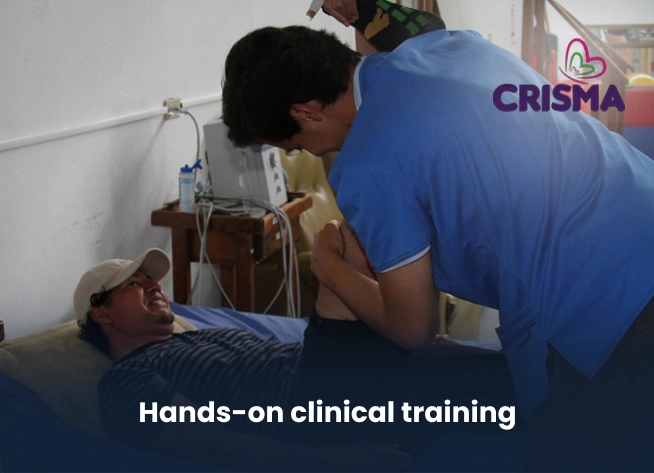
Healthcare student intern helping a patient with arm therapy at a community center
International healthcare interns gain hands-on experience in physical therapy, helping transform lives through rehabilitation training.

At CRISMA, we’re not just treating injuries – we’re transforming lives. Our programs are designed to meet the real needs of underserved communities with compassion, innovation, and care. From mobility restoration to emotional support, our approach empowers people to live fuller, freer lives.

But we don’t do this alone. Our doors are open to international pre-med and healthcare students through various volunteering and internship programs. These opportunities provide hands-on experience with patients in rehabilitation training, offering students a unique window into global health and community-based care. Whether it’s through an internship experience or a long-term volunteer role, students at CRISMA leave with more than just clinical knowledge – they leave with a deeper understanding of human resilience and the power of service.

If you’re looking for a way to make a real impact, join us. Be part of the story. Be part of the healing.