From UC Irvine to San Miguel – A Journey of Learning, Health, and Community Heart

November 24, 2025

Hello, dear CRISMA friends and supporters! We’re absolutely buzzing with excitement as we share a recent milestone that truly embodies the spirit of our work – collaboration that crosses borders and brings brilliant minds right to our community.

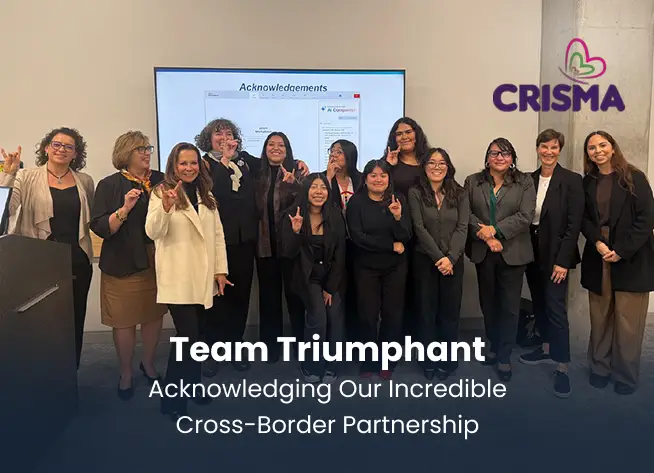
Recently, we had the immense pleasure of seeing the phenomenal culmination of a recent project. A group of future public health leaders – Master’s students from the Joe C. Wen School of Population & Public Health at UC Irvine (UCI) – presented their findings back in California from their Global Learning Experience with us in September. We want to take a moment to celebrate the immediate, fresh energy, empathy, and academic rigor they brought to San Miguel de Allende.

A Deeper Dive into Community Health –  The CRISMA Extension Program

The students’ work centered around a project titled: “Reaching Rural Communities: The CRISMA Extension Program.” This isn’t just a catchy name; it reflects a genuine effort to understand and strengthen the services we provide to our neighbors in rural areas.

The UCI team, under the leadership of Environmental and Occupational Health student Natalie Han and Global Concentration student Janeth Cabañas, focused on key areas that directly impact the health and well-being of the people we serve. They were here not just to observe, but to actively participate and learn from the ground up during their September visit.

Two Workshops, Two Pathways to Empowerment
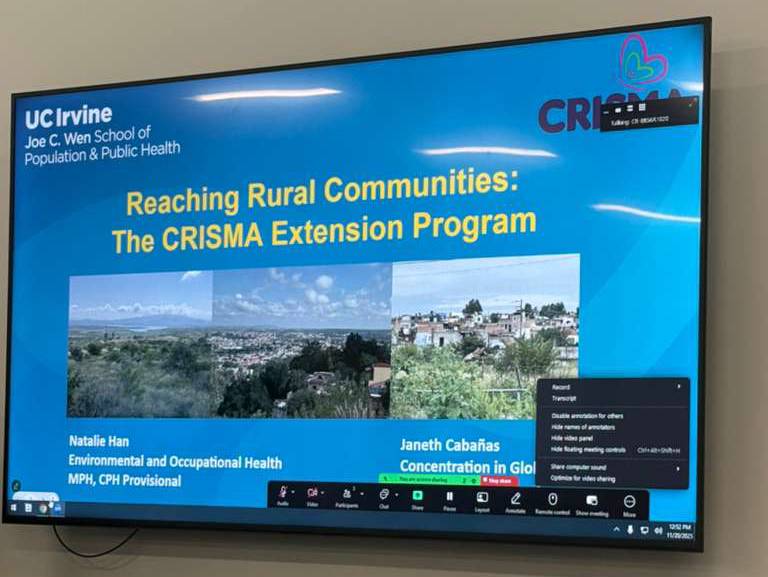
Presentation slide from UCI: "Reaching Rural Communities: The CRISMA Extension Program" featuring students Natalie Han and Janeth Cabañas.
The title slide from the recent UCI presentation, highlighting the ambitious goal of “Reaching Rural Communities” through the data-driven work of students Natalie Han and Janeth Cabañas.

A significant part of the project involved designing and evaluating two community workshops. This is where the academic learning turned into real-world impact:

  • Workshop 1: Education on CRISMA and Needs Assessment
    This session was all about introducing the community to the full range of CRISMA services and, crucially, listening. Through community discussions, the students conducted a needs assessment to understand the most pressing issues, because we know the people we serve are the true experts on their own needs.
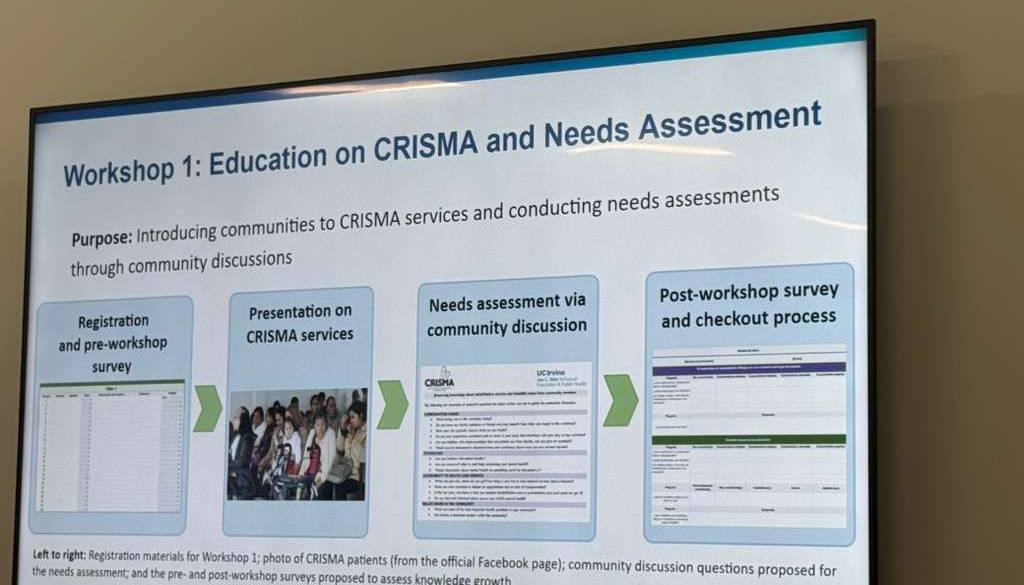
    ‘Workshop 1: Education on CRISMA and Needs Assessment’ presentation slide.
    Presentation slide of ‘Workshop 1: Education on CRISMA and Needs Assessment’
  • Workshop 2: Physiotherapy Techniques
    Based on what we see every day, this workshop was designed to empower communities with knowledge about rehabilitative and ergonomic practices they can use in their daily lives.
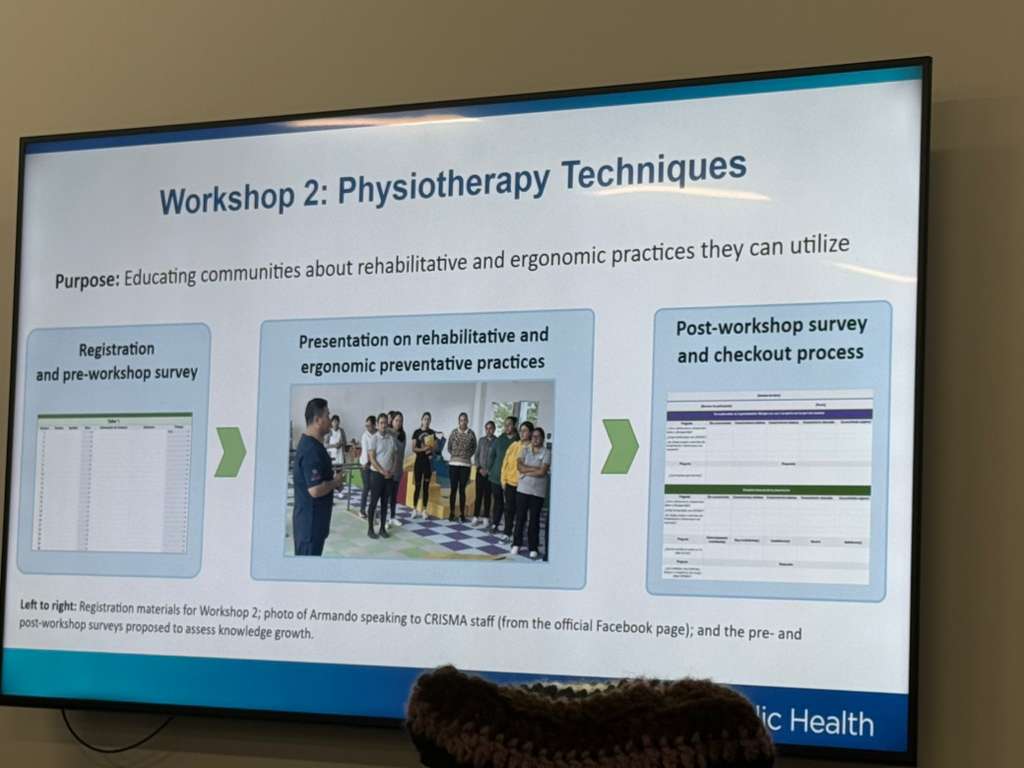
    ‘Workshop 2: Physiotherapy Techniques’ presentation slide.
    Presentation slide of ‘Workshop 2: Physiotherapy Techniques’

This work echoes the powerful insights shared by our own team members, like Dr. Rodrigo Marcelo Chávez Espinola, General Physician, who emphasized the crucial ‘window of opportunity’ for seeking timely care to prevent complications. It’s about getting people the right information and support at the right time. Likewise, Armando Rodriguez, Lead Physiotherapist, reminded us, “It’s not just about correcting their form, it’s about having them understand why it’s important, and how to prevent injuries.”

Navigating Data to Drive Better Care

Public health is not just about the heart; it’s also about evidence. The UCI students dedicated their time to rigorous academic work, focusing on reviewing and analyzing CRISMA’s nutrition records to evaluate the data-driven impact of the Alovēa supplement program.

Their project involved a clear process:

  1. Data Collection – Gathering and merging records.
  2. Data Cleaning – Making sure the information is accurate and ready to use.
  3. Data Visualization – Using tools like Tableau to make the data understandable.
  4. Data Analysis – Using statistical software (like R/SAS) to assess effectiveness and evaluate nutritional status changes.

The students noted important data collection gaps, such as missing baseline data and challenges with certain measurement tools (like digital scales for infants). This feedback is incredibly valuable, providing us with a clear roadmap for improving how we measure progress and, in turn, how we serve our communities better. It is a genuine collaboration where we learn from each other.

The UCI-CRISMA Partnership – A Journey of Learning and Belonging

The energy from the recent presentation, held at the Susan Samueli Integrative Health Institute, was inspiring. The students described their experience as “Where Culture Meets Public Health: A Journey of Learning and Belonging”- a testament to the welcoming spirit of the people of San Miguel and the staff at CRISMA.

Their work, and the address by Dean Bernadette Boden-Albala, MPH, Dr.PH, of the Joe C. Wen School of Population and Public Health, reaffirms that when academia and community hearts meet, truly remarkable things happen. We are so proud of the collaboration and the strong partnership built between our organizations.


View this post on Instagram


A post shared by CRISMA (@crismamexico)

We are deeply grateful for the dedication of these students and the entire UCI team. This collaboration reminds us that by working together – sharing knowledge, showing kindness, and embracing the principle of evidence-based care – we can continue to reach more rural communities and empower families to live healthier, stronger lives.

Thank you, UCI, for sharing your time and your minds with us!
A Pre-PT’s Guide – How to Secure Physical Therapy Internship for Undergraduates in Mexico

November 19, 2025

Gaining hands-on experience is a cornerstone of becoming a successful physical therapist. For undergraduate students, a physical therapy internship offers the chance to observe, learn, and practice in real-world settings. While the path may seem overwhelming, understanding the steps and opportunities available, especially through international programs, can make the journey smoother and more fulfilling. Physical therapy internships abroad offer a unique perspective on patient care, rehabilitation methods, and professional growth that goes beyond textbooks.

Why a Physical Therapy Internship Matters

A physical therapist internship is more than just a resume booster. It provides students with exposure to diverse patient populations, various treatment techniques, and different healthcare systems. By observing and assisting licensed physical therapists, interns develop clinical reasoning, professional communication skills, and confidence in their ability to handle diverse patient needs. Whether it’s working with pediatric patients, adults recovering from injuries, or individuals with chronic conditions, the experience provides invaluable insight into the realities of a career in physical therapy.

Choosing the Right Internship

Not all internships are created equal. When exploring physical therapy internships, consider programs that provide structured learning, mentorship, and hands-on opportunities. For undergraduates, it’s essential to find internships that provide opportunities for active observation while fostering professional growth. Programs abroad, such as those in Mexico, often combine clinical experience with cultural immersion, providing students with a more comprehensive understanding of healthcare practices and patient care approaches across diverse settings.

Preparing to Apply

Securing a physical therapy internship requires preparation. Start by identifying programs that align with your career goals and availability. Ensure your application is complete with an updated résumé, letters of recommendation, and a personal statement reflecting your interest in physical therapy and your willingness to learn. Highlighting previous volunteer experience, coursework, and relevant skills can strengthen your application. A thoughtful approach shows initiative and eagerness, qualities that mentors and program coordinators highly value.

Making the Most of Your Internship

Once accepted, the key is active engagement. Ask questions, observe procedures, and take notes on treatment techniques and patient interactions to ensure effective care. Building strong professional relationships with your supervisors can provide guidance, mentorship, and even future opportunities. Participating in patient care under supervision, attending team meetings, and reflecting on your experiences daily can enhance learning and ensure that your time in the internship is both productive and meaningful.

Benefits of Physical Therapy Internships Abroad

Internships abroad offer a unique lens through which to view healthcare. Experiencing patient care in Mexico allows students to learn different rehabilitation techniques, adapt to new environments, and develop cross-cultural communication skills. The combination of clinical observation and cultural immersion broadens perspectives, helping students become more empathetic, adaptable, and globally aware healthcare professionals.

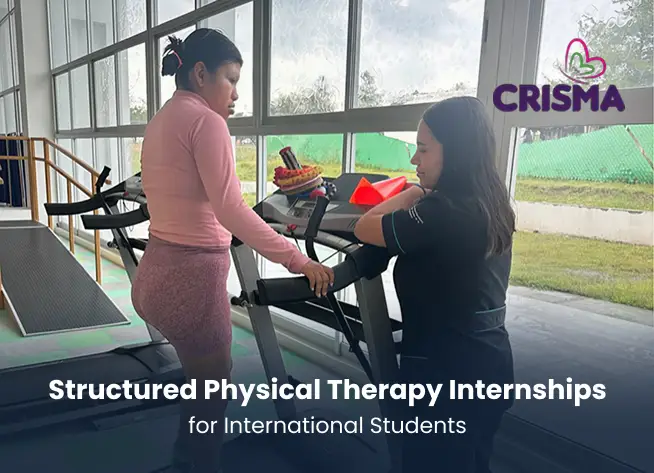
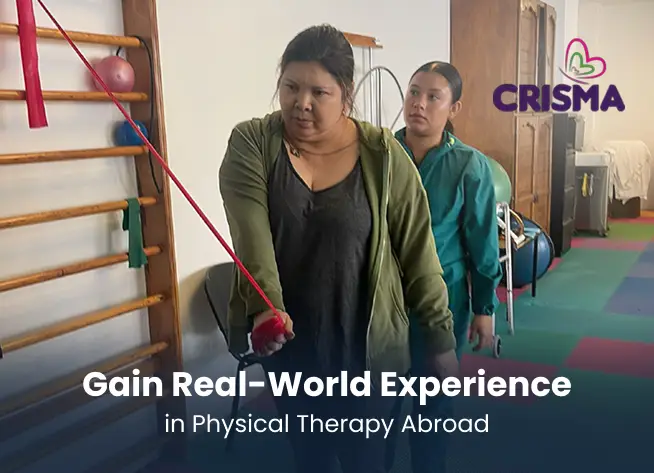
Pre-PT student participating in supervised physical therapy session
The internship program offers guided observation, mentorship, and hands-on exposure to prepare undergraduates for careers in physical therapy.

Planning Ahead

Start planning early. Research programs, understand application deadlines, and prepare any necessary documentation such as health clearances, visas, or insurance requirements. Clear planning ensures a smooth start to your internship, allowing you to focus on learning and growth once you’re on-site. Staying organized and proactive demonstrates professionalism, a trait every aspiring physical therapist should cultivate.

Conclusion

A physical therapy internship offers undergraduates an invaluable opportunity to gain real-world experience, develop essential skills, and immerse themselves in patient care. The internship program offered by CRISMA in Mexico provides the added benefit of cultural and clinical diversity, shaping students into well-rounded, empathetic future healthcare professionals. 

The internship program offers international students structured observation, mentorship, and hands-on experience in various therapy settings, enabling them to build confidence and clarity about their future careers. Contact us to discover how this opportunity can help you advance your journey toward becoming a skilled and compassionate physical therapist.


FAQs

1. What is a physical therapy internship, and why is it important?

A physical therapy internship is a structured experience that allows undergraduate students to observe and assist licensed therapists. It is essential for gaining hands-on knowledge, understanding patient care, and developing professional skills before applying to graduate programs.

2. How can I find physical therapy internships abroad?

Start by researching accredited programs, international healthcare organizations, or educational institutions offering clinical observation opportunities. Look for programs that provide mentorship, clear learning objectives, and exposure to diverse patient populations.

3. What skills can I gain from a physical therapist internship?

Interns develop observation and communication skills, clinical reasoning, cultural competency, and familiarity with treatment techniques. These experiences enhance confidence and prepare students for advanced studies in physical therapy.

4. Do I need prior experience to apply for a physical therapy internship?

While prior volunteer or healthcare experience is helpful, many programs accept motivated undergraduates with strong academic backgrounds. Highlighting coursework, volunteering, or relevant skills strengthens your application.

5. How do internships in Mexico benefit international pre-PT students?

Internships in Mexico offer exposure to different rehabilitation techniques, patient care approaches, and healthcare environments. Cultural immersion and cross-cultural communication further enhance empathy, adaptability, and global healthcare awareness.

The Future of Care – Why Pediatric Rehabilitation Observation Is a Critical Experience for Pre-Med Students

November 6, 2025

There’s a moment every future doctor remembers; a moment where medicine stops being an idea and becomes a calling. For many pre-med students, that moment arrives when they witness a young child take their first steps after months of hard work in Pediatric Rehabilitation.

It’s not just medical progress. It’s a life-changing transformation. Pediatric therapy rooms are filled with laughter, tiny victories, determined parents, and a healthcare team that celebrates every milestone with joy. Shadowing or observing this environment gives pre-med students something textbooks never can: the heart of medicine.

Why Pediatric Rehabilitation Matters in Modern Healthcare

Through pediatric physiotherapy shadowing, students can witness firsthand how care teams tailor their approach to a child’s abilities and emotional needs. They observe how families are guided, supported, and empowered, and how therapy becomes play while still leading to measurable improvement. This perspective prepares future doctors to be not just clinically skilled, but emotionally aware; something that is desperately needed in healthcare.

Real Learning Happens Beyond the Classroom

Medical textbooks are valuable, but they cannot teach the emotional depth of caring for a child who struggles to speak, walk, or hold a pencil. Observing real therapy sessions provides insights that no lecture can match.

During pediatric rehabilitation observation, pre-med students learn how physical and occupational therapists engage children in purposeful play. They observe how treatment plans are developed and adjusted over time, gaining an understanding of how small improvements can lead to significant change. Instead of just reading about gross and fine motor skills, students witness how these skills are practiced, strengthened, and celebrated. Somewhere between the first hesitant movement and the loud cheers that follow, students begin to understand why they want to become doctors.

What Watching Kids Teach Us About Resilience

Children do not approach therapy with fear; they approach it with determination. Whether they are learning to balance, improving coordination, or strengthening muscles, kids tackle each challenge with courage, and often with a smile.

Through pediatric therapy volunteer opportunities, students come to realize that healing is not a linear process, that resilience can be taught, and that children are master teachers in their own right. Pre-med students often leave these experiences surprised, not by how much they helped, but by how much they learned from the children.

Understanding the Collaborative Nature of Pediatric Care

Pediatric Rehabilitation is never the work of a single individual. Doctors, physical therapists, occupational therapists, nurses, speech therapists, and families collaborate to create a supportive environment. Observing this teamwork allows pre-med students to witness what holistic medicine looks like in action.

They learn how communication between providers ensures consistent care, how therapy goals are set based on functional outcomes, and how professionals adjust strategies to match a child’s progress and personality. It prepares students for the reality of patient care, where collaboration and empathy are just as important as knowledge.

Developing Emotional Intelligence – A Skill Doctors Need

In pediatrics, the smallest victories often mean the most. A new word spoken, a hand finally gripping a toy, or a first independent step can be monumental. Students who engage in pediatric physiotherapy shadowing learn to slow down and appreciate progress at the child’s pace. They become better listeners, show patience and encouragement, and witness unconditional support from therapists. In essence, they learn what empathy in healthcare truly looks like.

For a deeper look into how pediatric therapy transforms young lives, read the blog post, Early Therapy for Kids: Helping Little Ones Grow Strong and Confident, which explores how early support shapes lifelong confidence and independence.

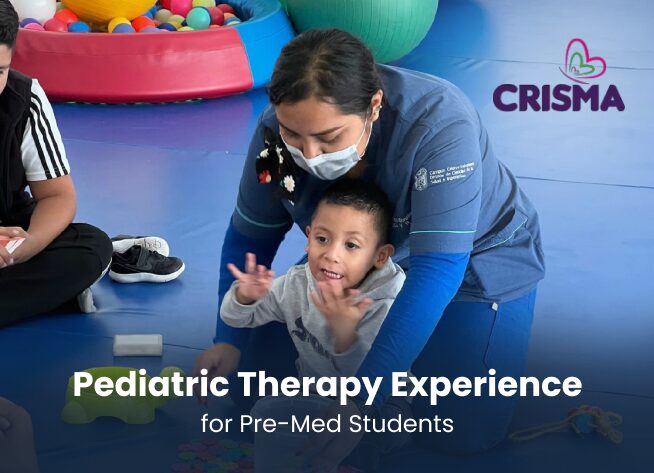
Pre-med students participating in pediatric therapy shadowing program, assisting therapists with exercises.
CRISMA offers immersive programs for pre-med students, including pediatric physiotherapy shadowing and volunteer opportunities in pediatric therapy.

The Future of Healthcare Starts With Heart

Through Pediatric Rehabilitation, future doctors learn to listen not only to symptoms but also to stories, building meaningful relationships with patients and families, and celebrating progress, no matter how small. If you are a pre-med student seeking an experience that will genuinely shape your approach to healthcare, pediatric rehabilitation observation is one of the most valuable opportunities you can pursue.

At CRISMA, we provide meaningful opportunities for pre-med students to gain hands-on experience and insight through observation. If you are ready to witness the heart of pediatric care, develop empathy, and learn from both children and dedicated professionals, contact us to learn more.

FAQs

What is pediatric rehabilitation observation, and why is it important for pre-med students?

Pediatric rehabilitation observation involves watching and learning from professionals as they provide therapy to children with developmental, neurological, or physical challenges. For pre-med students, it is important because it extends beyond textbook learning, offering insight into how healthcare providers integrate clinical knowledge with empathy and effective communication. Observing children’s progress, therapists’ strategies, and family interactions helps students understand the human side of medicine, which is essential for shaping compassionate future doctors.

How does pediatric physiotherapy shadowing benefit a student’s medical education?

Pediatric physiotherapy shadowing enables students to witness firsthand how therapy is tailored to each child’s unique needs, encompassing exercises, mobility training, and creative methods of engaging children in treatment. Students gain practical knowledge of therapeutic approaches, patient assessment, and treatment planning. More importantly, shadowing nurtures emotional intelligence, teaching pre-med students to appreciate progress in non-linear ways and to communicate effectively with young patients and their families—skills that are crucial in any medical specialty.

Can volunteering in pediatric therapy help pre-med students develop skills beyond clinical knowledge?

Yes. Participating as a pediatric therapy volunteer helps students develop empathy, patience, and strong interpersonal skills. They learn to build trust with children, encourage their participation in therapy, and support families as they navigate healthcare challenges. These experiences cultivate qualities that are invaluable in medicine, such as resilience, emotional awareness, and the ability to provide holistic care that addresses both physical and emotional needs.

What kind of experiences will students gain during pediatric rehabilitation observation?

Students will observe therapists interacting with children, implementing exercises, and adjusting treatment plans based on individual progress. They will see how therapists make therapy engaging and motivating while tracking measurable outcomes. Students also gain insight into multidisciplinary teamwork, observing how doctors, therapists, and families work together to coordinate care. This immersive exposure teaches students about the importance of collaboration, communication, and the personalized nature of pediatric healthcare.

How can pediatric rehabilitation observation impact a student’s future career in medicine?

This type of observation can significantly strengthen a student’s medical school application and professional development. It demonstrates a commitment to understanding patient-centered care, particularly in high-empathy settings. Students learn how early intervention can shape a child’s development, how therapy goals are set and achieved, and how emotional support complements clinical care. These lessons influence how future doctors approach patient care, making them more compassionate, attentive, and effective healthcare providers.